











































































![International Collaboration in Health Research: Evaluating a Systematic Review on [Country's Name] by Non-native Authors](/media/djmediatools/cache/images/x723x274-crop-90-ikdaf2cd3qtv1rkqp1sj6ccnzuavwc6srudo0nxz_1.png.pagespeed.ic.HW7uSdT1rb.png)


























































































































































































































































































































































































































































































































































































































































![International Collaboration in Health Research: Evaluating a Systematic Review on [Country's Name] by Non-native Authors](/media/djmediatools/cache/images/x119x130-crop-90-ikdaf2cd3qtv1rkqp1sj6ccnzuavwc6srudo0nxz_1.png.pagespeed.ic.wrYLO_DTxU.jpg)







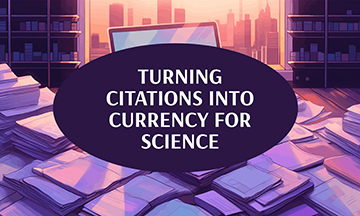
The narrative begins in the aftermath of World War II when increased funding for research, championed by Vannevar Bush, positions basic research as a catalyst for technological progress. The resulting surge in scientific publishing creates opportunities for information scientists and publishers. In the 1950s, Robert Maxwell and Eugene Garfield shape the blueprint for the research economy. Maxwell establishes Pergamon Press, an international publisher, while Garfield invents the science citation index to manage the growing knowledge flow.
Read more: Turning Citations into Currency for Science: A Historical Perspective

A paper was submitted to journal A with a covering letter stating that it was entirely original. However, when the editor looked at the references he found considerable overlap with a paper already published in journal B about the same infection outbreak, but with a completely different set of authors bar one. A comparison of the papers showed that there was considerable overlap.
A letter containing details of a case report was submitted to the journal. The authors were from Japan. After peer review and revision, the case report was accepted and a proof was sent to the authors. Two anonymous letters were then received, both from Japan. Both letters claimed that the author “has prized honour above everything else” and that he had submitted “nonsense data.”
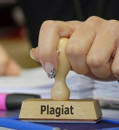
A review article was submitted to the journal and sent for peer review. One of the reviewers brought to the editor’s attention that a substantial number of sentences and sections of the paper had directly, verbatim, been copied from chapter books and a monograph he had written in the past. The editor asked the reviewer to provide the texts in question. The editor carefully compared the submitted manuscript with the publications provided by the reviewer and concluded that the submission presents a severe case of plagiarism.
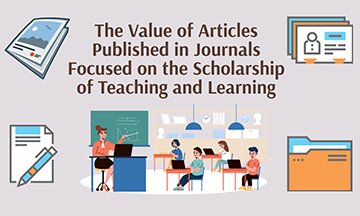
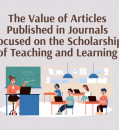
The journal Innovative Higher Education recently published a study delving into the value of articles featured in Scholarship of Teaching and Learning (SoTL) journals. The investigation employed citations and four types of altmetrics as key indicators of value, utilizing a sample of 100 articles from four prominent SoTL-focused journals: two high-consensus journals (BioScience: Journal of College Biology Teaching and The Journal of Chemical Education) and two low-consensus journals (Teaching History and Teaching Sociology). The study also examined the level of consensus across disciplines in these journals, along with the institutional type of the articles' first authors and the type of study presented.
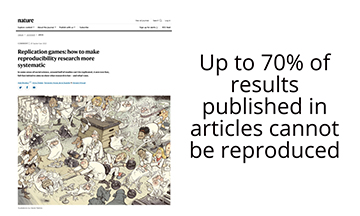
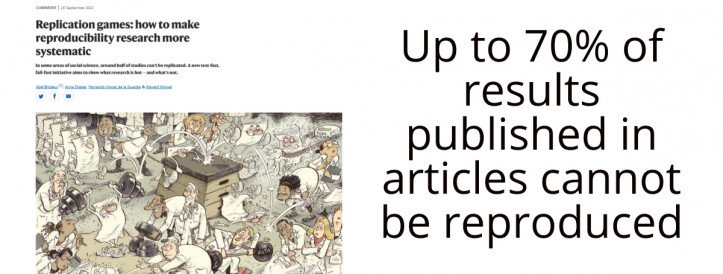
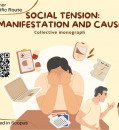
A recent article in the journal Nature highlights a concerning trend in some areas of the social sciences, suggesting that up to 70% of published results cannot be replicated. This replication crisis is particularly prevalent in fields like economics, philosophy, and psychology, where between 35% and 70% of published findings reportedly fail to withstand testing with new data.
A journal received a request from University A for a published paper to be retracted, citing ethical issues with the grant application submitted by an author from University B. The journal is satisfied that the rigorous editorial processes required by the journal were followed prior to publication and asked for specific details of the ethical breach; evidence that all authors on the publication had been advised of the request for retraction; and the results of the institutional investigation into the matter.
Read more: REQUEST FOR RETRACTION DUE TO ALLEGED ETHICAL MISCONDUCT IN A GRANT APPLICATION
The journal received multiple complaints from two ‘whistleblowers’ in country A regarding the methodology presented in an article published in 2021. The Editors began an investigation into the paper, using evidence provided by the whistleblowers. The Editors felt that based on the provided evidence, an investigation should be carried out. The authors, who were also from country A, were made aware of the fact their article was under investigation, as the journal needed to request underlying data for the investigation. They were not given any details regarding the complainants.
This is a general scenario which has been observed in increasing numbers. We are finding that some reviewers provide a referee’s report which include a request to cite a number of papers, which on closer inspection are all authored by the referee. The journal considers this to be clear citation manipulation and has contacted COPE for advice on the matter.