


























































![International Collaboration in Health Research: Evaluating a Systematic Review on [Country's Name] by Non-native Authors](/media/djmediatools/cache/images/x723x274-crop-90-ikdaf2cd3qtv1rkqp1sj6ccnzuavwc6srudo0nxz_1.png.pagespeed.ic.HW7uSdT1rb.png)
















































































































































































































































































































































![International Collaboration in Health Research: Evaluating a Systematic Review on [Country's Name] by Non-native Authors](/media/djmediatools/cache/images/x119x130-crop-90-ikdaf2cd3qtv1rkqp1sj6ccnzuavwc6srudo0nxz_1.png.pagespeed.ic.wrYLO_DTxU.jpg)















































































































































































































































































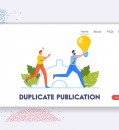























































































The Editor received an email from a reader highlighting concerns about a possible duplicate publication involving an article ("Article 1") published in their journal and a similar article published in another journal a year earlier. Immediate action was taken to address the issue by contacting the author and the editor of the other journal.
Read more: COPE Guidance on Handling Duplicate Publication: A Case Study

The journal received a case report for a patient presenting with a particular syndrome in which patients give approximate answers to simple questions. This syndrome has been considered as a dissociative condition but others have argued that it reflects simulation of psychiatric symptoms. The case report was an individual who had crashed his car and, following that, developed complaints of memory impairment and at psychiatric review this syndrome was diagnosed.

A journal received a paper from a single author, attributed to a UK institution, in which 10 children were operated on using two techniques, each child having one technique to one side and one to the other side, at the same operation. The paper went to review, and neither reviewer spotted that this was a prospective surgical study on children, with no mention of consent or ethical approval.
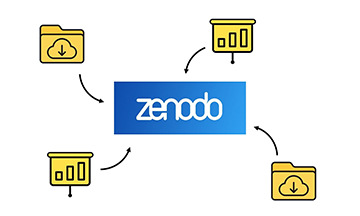
In the pursuit of transforming open access into open science, the European Union's visionary OpenAIRE project led to the creation of Zenodo in 2013. Initially conceived as a catch-all repository by CERN (the European Organization for Nuclear Research), Zenodo has evolved into a dynamic platform, celebrating its 10th anniversary this year. With 25 million annual visits, 3+ million uploads, and over 1 petabyte of data, Zenodo has become a trusted space for researchers worldwide.
Read more: Zenodo's Decade of Empowering Open Science: A Trusted Global Repository for Research
Passions are igniting in the realm of academic publishing as discussions swirl around the potential transformation of the European Union's research repository into a non-profit, collective, large-scale public good publishing service that could rival commercial publishers. In a recent article by Jack Grove on the Times Higher Education website, the proposal to amplify the use of the EU's open access platform, Open Research Europe, launched in 2021, has sparked a diverse array of reactions from the League of European Research Universities.
In a shocking revelation, a research paper submitted to Journal A underwent a tumultuous journey, raising concerns about ethical practices and transparency in the academic community. The paper, focused on monitoring a chemical element across various occupations and workplaces, faced scrutiny for methodological discrepancies during the revision process.
Read more: Deceptive Dual Submission Unveiled: Unraveling the Unethical Handling of Research Papers
A paper with five authors was submitted from a university hospital in a Middle-Eastern country. One of the reviewers complained that it extensively plagiarised one of his own publications. Examination showed that about 30% of the text and tables had been copied. The results were original, and in some cases had simply been slotted into the plagiarised text.
A paper was published and seven authors were credited. B was thanked for his contribution in the acknowledgements section. One year later B wrote to the editor, outlining two alleged incidents related to this paper. First, the cohort reported paper was one that B had been working. He sought collaboration with another research group. A grant was applied for and granted.

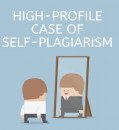
The president of Aizu University in Japan, Toshiaki Miyazaki, has resigned following two investigations that revealed self-plagiarism and double-submission in a dozen papers. The investigations, initiated more than a year ago, found that Miyazaki had self-plagiarized four papers initially, resulting in a forfeiture of 20% of one month's salary. Subsequent investigations revealed self-plagiarism in three papers and double submission in five, all related to sensor network studies published between 2008 and 2016.
Read more: University President in Japan Resigns Over High-Profile Self-Plagiarism Case