













































































































































































































































































































































































































































































































































































































The documented hijacking of a legitimate academic journal earlier this year shows how the pressure on researchers to publish, combined with the proliferation and development of AI technology, is threatening to undermine trust in research and is even derailing the careers of affected academics.
Read more: HOW JOURNAL HIJACKERS DERAIL ACADEMIC CAREERS WITH IMPUNITY
Last month marks the 10th anniversary of bioRxiv, a significant milestone for the biology preprint server that has revolutionized the way biologists share their research. Here is a personal take on 10 things you should know about preprints.

A scientist from Europe during his recent visit to Malaysia shared his nervousness about a student who applied for a PhD position in his laboratory. The first thing that struck him was a long list of 76 peer-reviewed publications authored by the student, who just completed a Master’s degree a few years ago.
Relationships between preprints and journal articles link different versions of research outputs and allow one to follow the evolution of a publication over time. Some of those relationships are provided by Crossref members (including publishers, universities, research groups, funders, etc.) when they deposit metadata with Crossref, but a significant number of them are missing.
Read more: DISCOVERING RELATIONSHIPS BETWEEN PREPRINTS AND JOURNAL ARTICLES

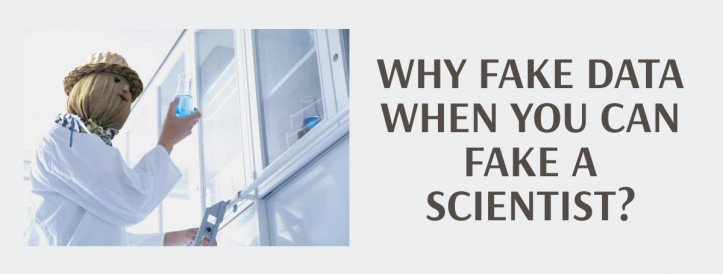
In the ever-evolving landscape of academic fraud, a disturbingly simple trend has emerged: the creation of entirely fictional scientists to manipulate scientific publications. Burkhard Morgenstern, a bioinformatics professor at the University of Göttingen, sheds light on this fraudulent practice, revealing a world where made-up personas not only infiltrate editorial boards but also carve out seemingly legitimate scientific careers.

The latest issue of the Eastern-European Journal of Enterprise Technologies has been released.
Case
Journal X was approached by an author who would like to submit an article. The author responded to a request to publish an article in a predatory journal without realizing that it was a predatory journal. The author submitted the article only to receive an unexpected bill and clear evidence of a lack of peer review. The author researched the magazine and then realized its predatory nature.
Read more: EXTRACTION OF ACCEPTED MANUSCRIPT FROM PREDATOR JOURNAL
The latest issue of the Eastern-European Journal of Enterprise Technologies has been released.
Read more: EEJET | Vol. 5 No. 12 (125) (2023) | Materials Science
One of today’s most direct new frauds is incredibly simple: Make up new people.
Hoss Cartwright, a former editor of the International Journal of Agricultural Innovations and Research, had a good excuse for missing the 5th World Congress on Virology last year: He doesn’t exist. Burkhard Morgenstern, a professor of bioinformatics at the University of Göttingen, dreamt him up, and built a nice little scientific career for him. He wrote Cartwright a Curriculum Vitae, describing his doctorate in Studies of Dunnowhat, his rigorous postdoctoral work at Some Shitty Place in the Middle of Nowhere, and his experience as Senior Cattle Manager at the Ponderosa Institute for Bovine Research. Cartwright never published a single research paper, but he was appointed to the editorial boards of five journals.