


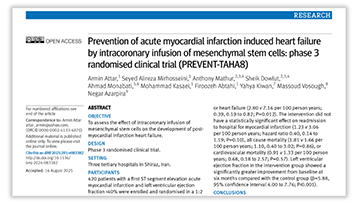
The paper claims the phase III clinical trial published October 29, 2025 included over 400 patients in Shiraz, Iran, and tested whether stem cell therapy lowers the risk of heart failure after a heart attack. The results were celebrated in a press release by the journal and appeared in several news outlets, with New Scientist calling the study the "strongest evidence yet that stem cells can help the heart repair itself."
Almost immediately after the paper was published, sleuth Dorothy Bishop started noting inconsistencies with the data on PubPeer. Specifically, as she wrote in one comment, the study claimed to have enrolled only patients under 65 years old. However, in the accompanying data, 127 of the patients were older than 65 – a "complete mismatch".
Nick Brown, a psychologist and sleuth, discovered a "curious repeating pattern of records in the dataset", where every 101 records, almost all the values were identical, he wrote on PubPeer. Bishop speculated it was "as if somebody’s just cutting and pasting to full up a column." Almost all the patient’s weights – 288 of 334 reported cases – were integers, and multiples of five kilograms were "heavily over-represented", Brown wrote in another PubPeer comment.
Some of the data issues may have been flagged during peer review, but the sequence of events outlined in the reports suggest the authors didn’t share the data until after review, Bishop said.
