


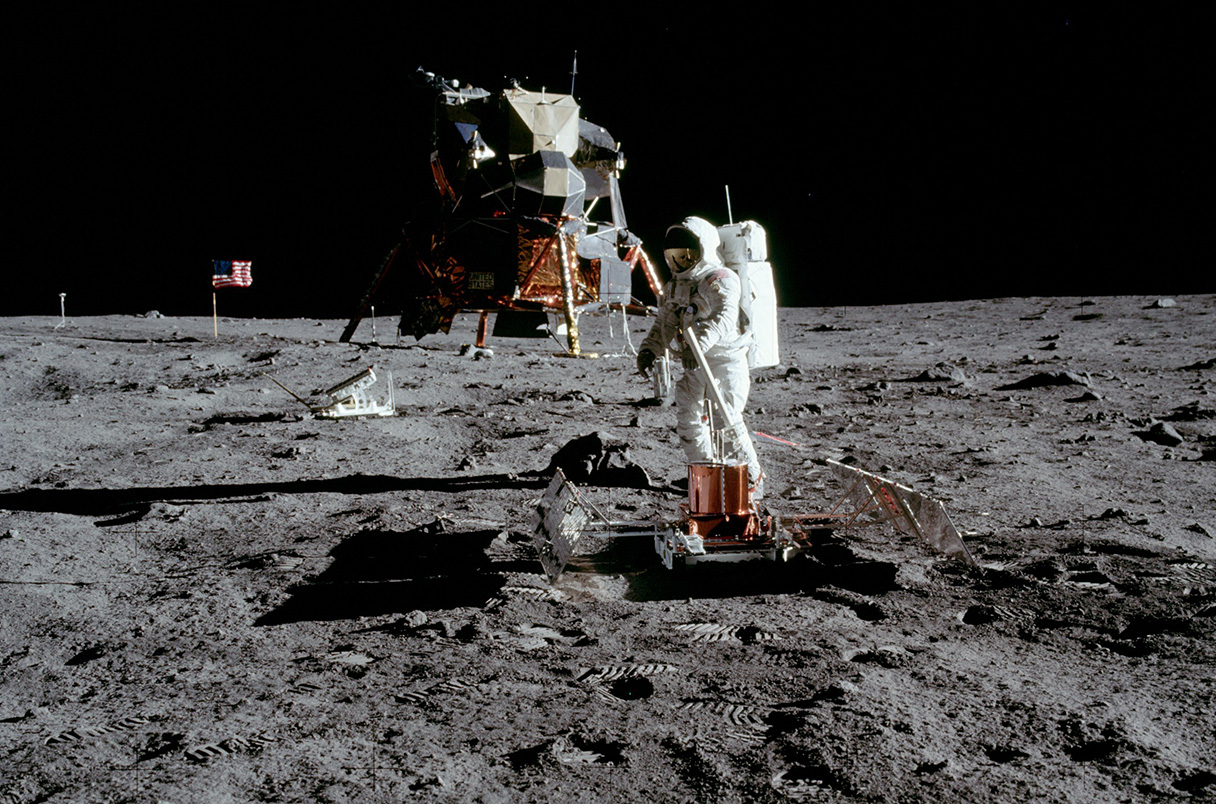
Recent analysis of decades-old data from the Apollo missions has unveiled a surprising revelation: the Moon is far more seismically active than previously believed. By reexamining archival data using advanced techniques, scientists have nearly tripled the number of known moonquakes, shedding new light on lunar activity and potential hazards for future missions.
During the Apollo missions, seismometers left on the lunar surface recorded thousands of moonquakes, but much of the short-period data remained unexplored due to noise and technical limitations. However, a meticulous analysis of these overlooked records has unearthed over 22,000 additional moonquakes, significantly expanding our understanding of lunar seismicity.
The newfound moonquakes, particularly those originating from shallow depths below the surface, challenge previous assumptions about lunar tectonics and interior structure. While most moonquakes are attributed to meteorite impacts or tidal forces from Earth, the discovery of shallower quakes suggests a more complex and active lunar environment.
These shallow moonquakes, although smaller in magnitude, offer valuable insights into the Moon's geological processes. Their distribution, particularly near the Apollo 15 landing site, hints at regional variations in seismic activity and raises intriguing questions about the Moon's geological history.
Moreover, the presence of these shallow moonquakes challenges existing models of lunar seismicity, suggesting a deeper origin possibly linked to ancient magmatic activity. This unexpected finding underscores the need for further research and exploration to unravel the mysteries of the Moon's interior.
As NASA prepares to deploy new seismometers on the lunar surface, these findings pave the way for a deeper understanding of lunar geology and seismic activity. The surge of interest in revisiting Apollo data highlights the untapped potential of archival records in advancing our knowledge of the cosmos.
In the quest to unlock the secrets of the Moon, scientists remain optimistic that further discoveries await, emphasizing the importance of continued exploration and analysis to unravel the enigmatic lunar landscape.
More: https://www.science.org/content/article/number-known-moonquakes-tripled-discovery-apollo-archive
