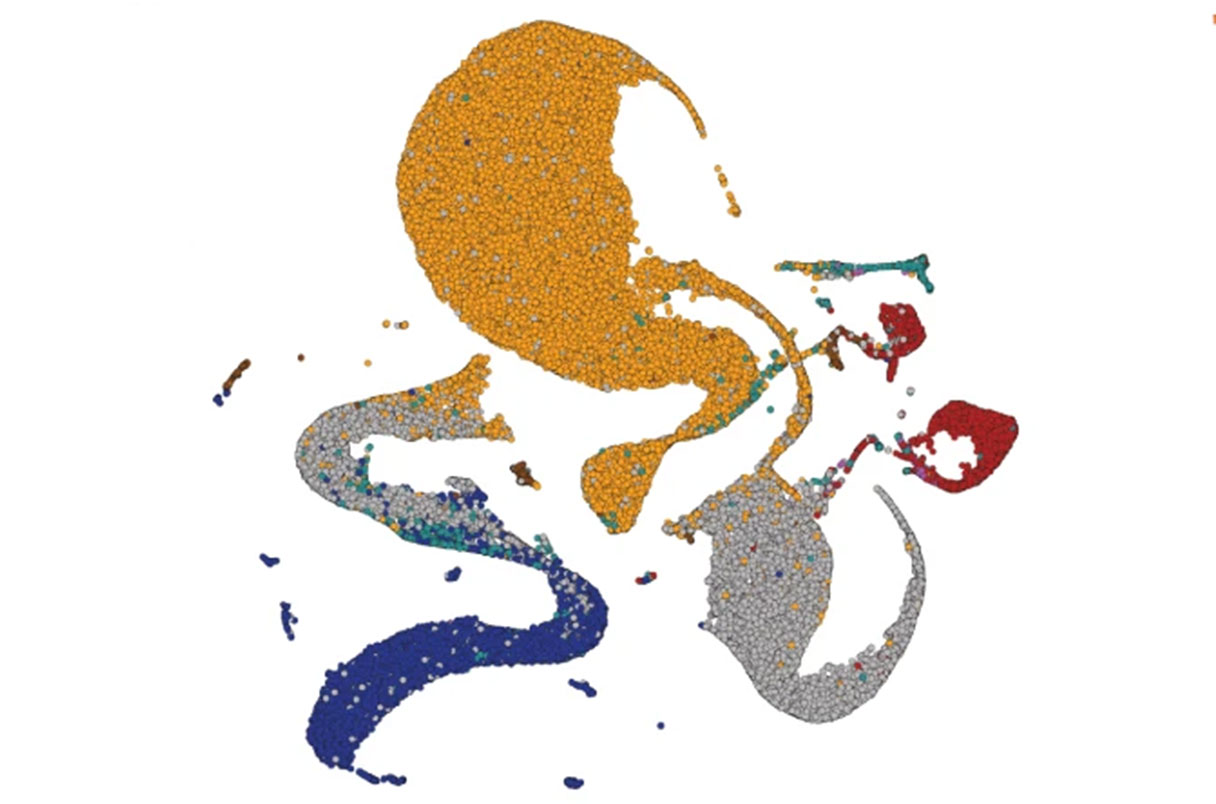
A recent publication in Nature detailing a large-scale U.S. health research initiative aimed at capturing the genetic diversity of individuals across the nation has sparked intense debate on social media. Critics argue that a figure depicting patterns of relatedness among study volunteers, which suggests distinct racial categories, could perpetuate misconceptions about human genetic variation.
The All of Us study, funded by the National Institutes of Health, seeks to address the lack of diversity in existing genomic datasets by prioritizing recruitment from underrepresented populations, including Black people, Latinos, and others. While the study's efforts have been applauded for broadening the scope of genomic research, concerns have been raised regarding the portrayal of genetic diversity in its findings.
Criticism has centered around the use of the uniform manifold approximation and projection (UMAP) algorithm to visualize genetic relationships among participants of different racial backgrounds. Critics argue that the simplified representation created by UMAP may oversimplify the complexity of genetic data, potentially reinforcing erroneous beliefs about the biological basis of race.
Prominent geneticists have voiced concerns about the misleading nature of the visual representation and its potential to be misinterpreted by the public. While acknowledging the challenges of representing complex genomic data in a two-dimensional format, experts emphasize the need for clarity and caution in conveying genetic ancestry information.
The corresponding author of the paper defends the use of UMAP, citing its widespread adoption in other major human genome studies. However, calls for a retraction of the paper and greater attention to the nuances of genetic ancestry labeling have been made by some members of the scientific community.
In response to the controversy, Nature has acknowledged the discussions surrounding the paper and is in communication with the authors. While the All of Us initiative is recognized for its inclusivity, the episode underscores the importance of carefully considering how genetic diversity is portrayed and interpreted in scientific research.
More: https://www.science.org/content/article/huge-genome-study-confronted-concerns-over-race-analysis