


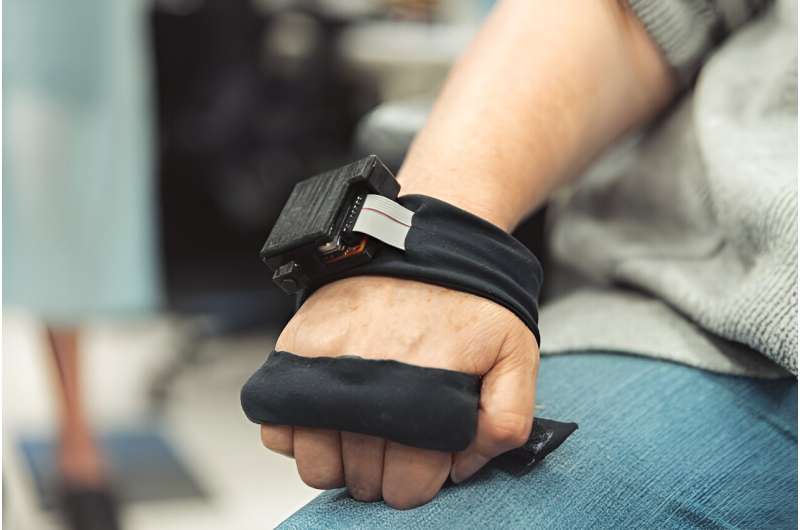
In a groundbreaking development, engineers from Stanford University and the Georgia Institute of Technology have unveiled a wearable medical device in the form of a glove that shows promise in alleviating muscle spasms in stroke survivors. Unlike traditional treatments involving costly injections or potent medications, this innovative glove employs simple yet effective mechanical vibrations to mitigate symptoms.
Lead researcher Allison Okamura, along with her team, observed remarkable and sustained improvements in patients' symptoms through the application of high-frequency mechanical vibrations. Caitlyn Seim, a postdoctoral researcher involved in the project, highlighted the device's potential to address various effects of stroke, including numbness, spasticity, and limited range of motion, thereby significantly enhancing patients' quality of life.
This pioneering effort marks the first exploration of vibrotactile stimulation (VTS) technique on a wearable scale, offering a more accessible and convenient alternative to conventional treatment methods. Patients participating in trials wore the VTS device for three hours daily over eight weeks, with results comparable to or even surpassing those of injections or oral medications.
The VTS glove, initially conceived as a motor learning aid and interactive music exercise tool, has evolved into a therapeutic device with the potential to revolutionize intensive stimulation therapy. Its wearable form factor allows for continuous use throughout the day, presenting a novel approach to stroke rehabilitation and symptom management.
More: https://medicalxpress.com/news/2024-02-vibrating-glove-patients-recover-muscle.html
