


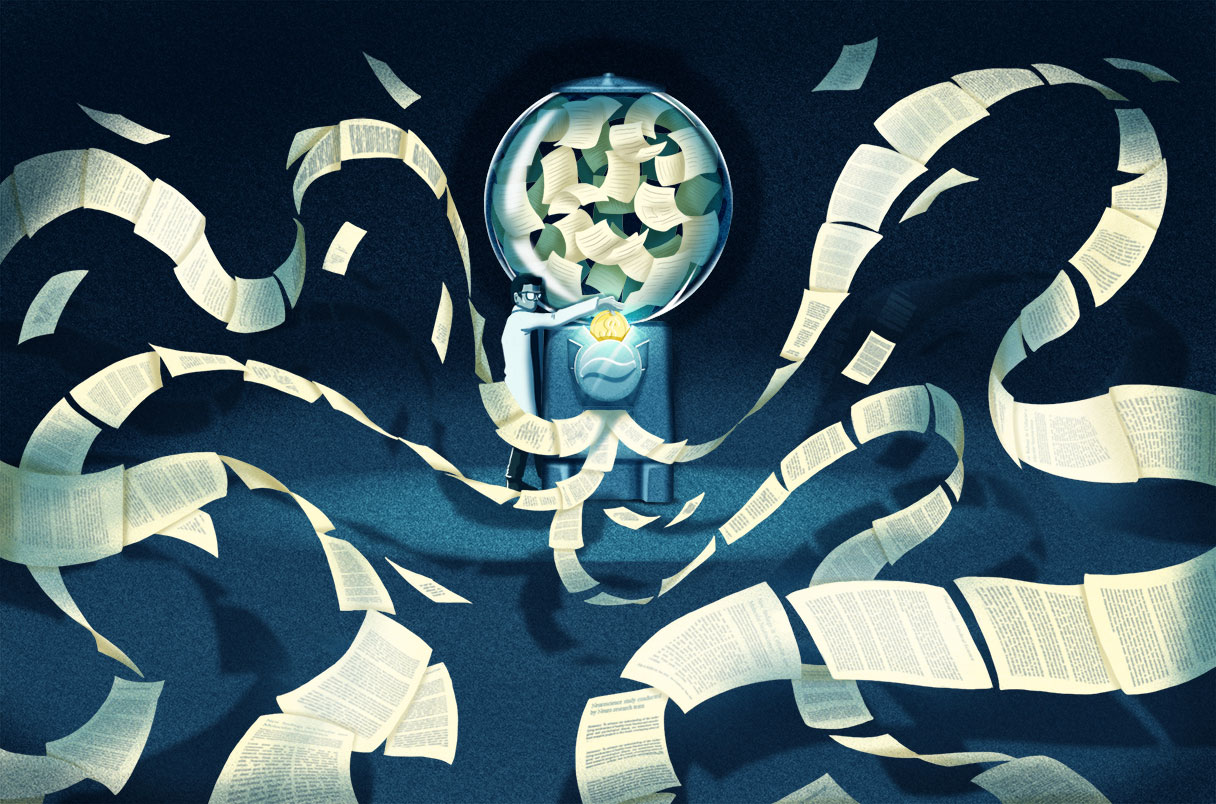
In a startling revelation, a vendor offering citations for purchase has emerged as the latest disruptor in scholarly publishing. A recent investigation by researchers at New York University (NYU) Abu Dhabi has uncovered the alarming trend of academic manipulation through bought citations.
The study, posted as a preprint on arXiv, sheds light on the deceptive practices employed by some in the academic community to artificially inflate their citation metrics, impacting hiring and promotion decisions.
Lead author Yasir Zaki and his team uncovered suspicious patterns among researchers, identifying instances where citations experienced an inexplicable surge, often stemming from low-quality publications. The investigation also revealed instances of excessive self-citations and the unethical practice of purchasing citations to boost one's profile.
The researchers simulated a fictitious academic persona, aided by ChatGPT, and flooded preprint servers with articles on fake news, embedded with self-citations. Subsequently, they successfully purchased citations, exposing the ease with which such fraudulent activities can be conducted.
Notably, the study introduces the citation concentration index (c2-index) as a potential metric to identify anomalous citation patterns, aiming to curb academic misconduct. However, concerns persist regarding the adaptability of bad actors to evade detection.
This alarming discovery underscores the urgent need for greater vigilance and measures to uphold the integrity of scholarly publishing. As the academic community grapples with these challenges, the onus lies on platforms like Google Scholar to address loopholes and safeguard the credibility of academic literature.