


In a groundbreaking revelation, archaeological findings from the central German village of Ranis shed light on the coexistence of modern humans and Neanderthals in northern Europe over 45,000 years ago. Three recent papers in Nature and Nature Ecology & Evolution reveal the discovery of hominin bones, dating back millennia, identified as Homo sapiens. The artifacts, including a distinctive stone blade style called Lincombian-Ranisian-Jerzmanowician (LRJ), challenge previous assumptions about the early human presence in the region.
The LRJ tools, once attributed to Neanderthals, now suggest that modern humans were more widespread than previously believed, sharing the continent with Neanderthals in a complex mosaic pattern. This challenges the traditional narrative of a single wave of modern humans replacing Neanderthals. Instead, evidence points to small groups of Homo sapiens gradually migrating from Africa to Europe, overlapping with Neanderthals for an extended period.
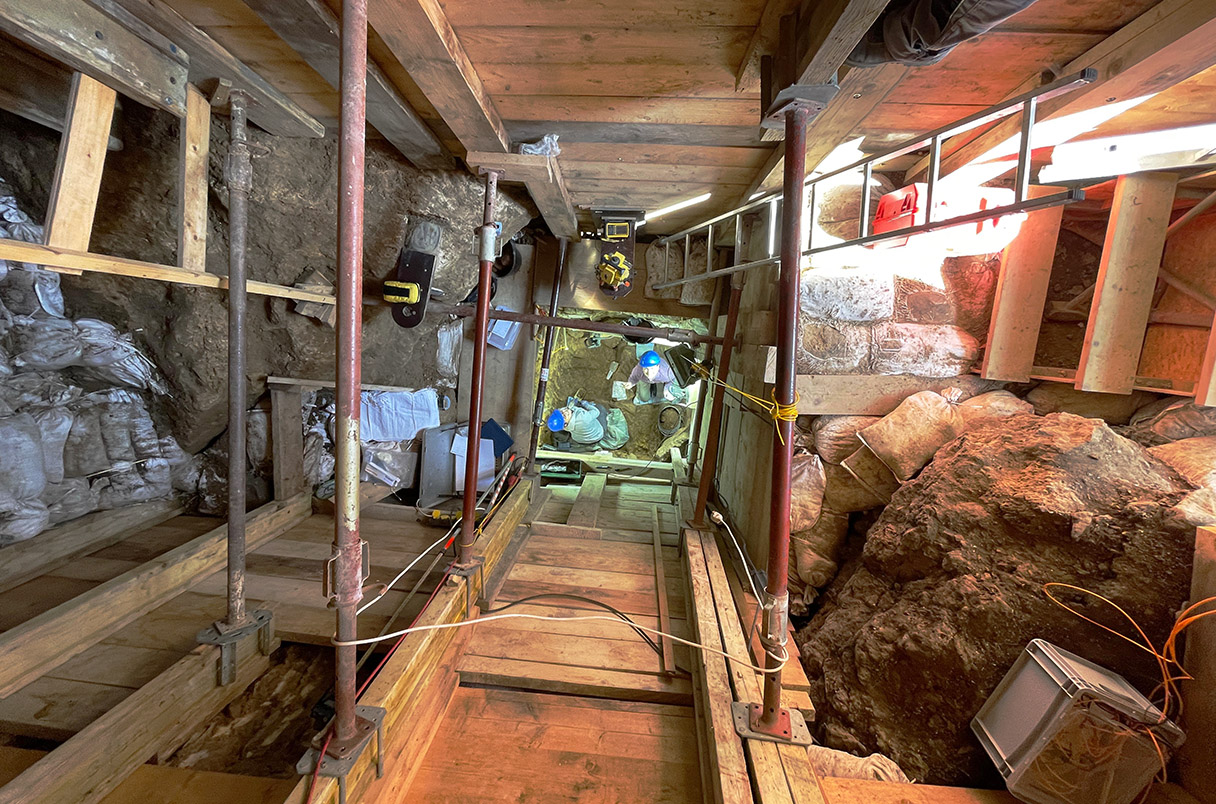
Genetic analysis supports the notion of coexistence, revealing interactions between the two groups. The Ranis findings, along with discoveries in Bulgaria and the Czech Republic, indicate a diverse and intricate process of early human colonization in Europe. The evidence, meticulously extracted from Ranis through challenging conditions, unveils a well-preserved site that offers unprecedented insights into the past.
Notably, the LRJ layers in Ranis provide a glimpse into the challenging environment faced by ancient hunters, with protein signatures from various animal remains and oxygen isotopes from horse teeth revealing a peri-Arctic climate 48,000 years ago. Surprisingly, these early Homo sapiens adapted to the harsh conditions of northern Europe, dispelling previous assumptions about their reluctance to venture into colder climates.
However, some skeptics, like University of Tübingen archaeologist Nicholas Conard, caution against exclusively attributing LRJ sites to Homo sapiens, suggesting a need for further investigation. Despite their ability to coexist for millennia, the Ranis population and their contemporaries eventually gave way to a new wave of modern humans around 40,000 years ago, leading to the marginalization and extinction of Neanderthals.
