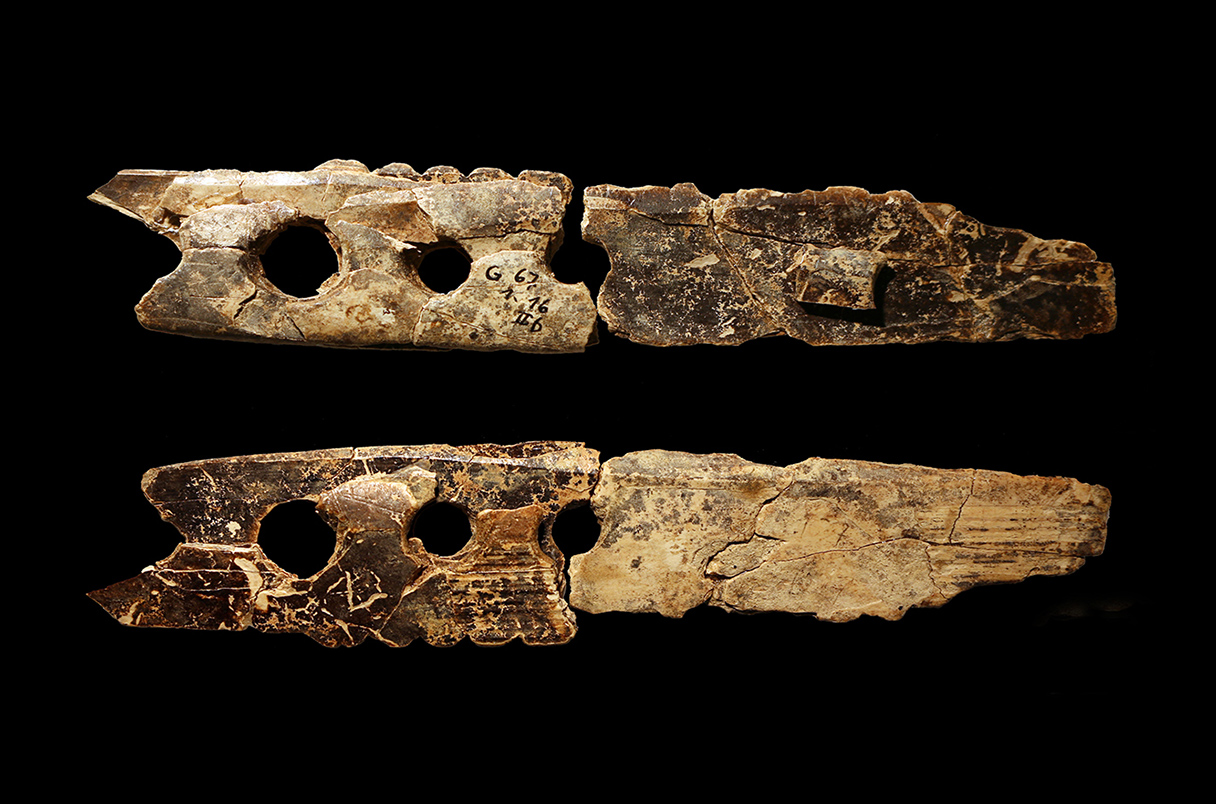
Archaeological mysteries surrounding perforated batons, discovered in a cave in southwestern Germany, have finally been unraveled. Initially thought to be ritualistic objects or noisemakers from the last ice age, a new study in Science Advances posits a more practical application: ropemaking.
The batons, crafted from mammoth ivory and featuring multiple holes with spiraling grooves, were prevalent in Germany and nearby France over 35,000 years ago. The prevailing belief was that these artifacts held ritualistic significance, but Nicholas Conard, an archaeologist from Eberhard Karl University of Tübingen, challenged this notion. Conard, who has been excavating at Hohle Fels for over two decades, discovered a well-preserved baton in situ, prompting further investigation.
Examining the precision of the spirals and analyzing soil near the holes, co-author Veerle Rots of the University of Liège discovered higher concentrations of plant fibers, leading the researchers to the conclusion that these tools were used for turning plant fibers into rope.