


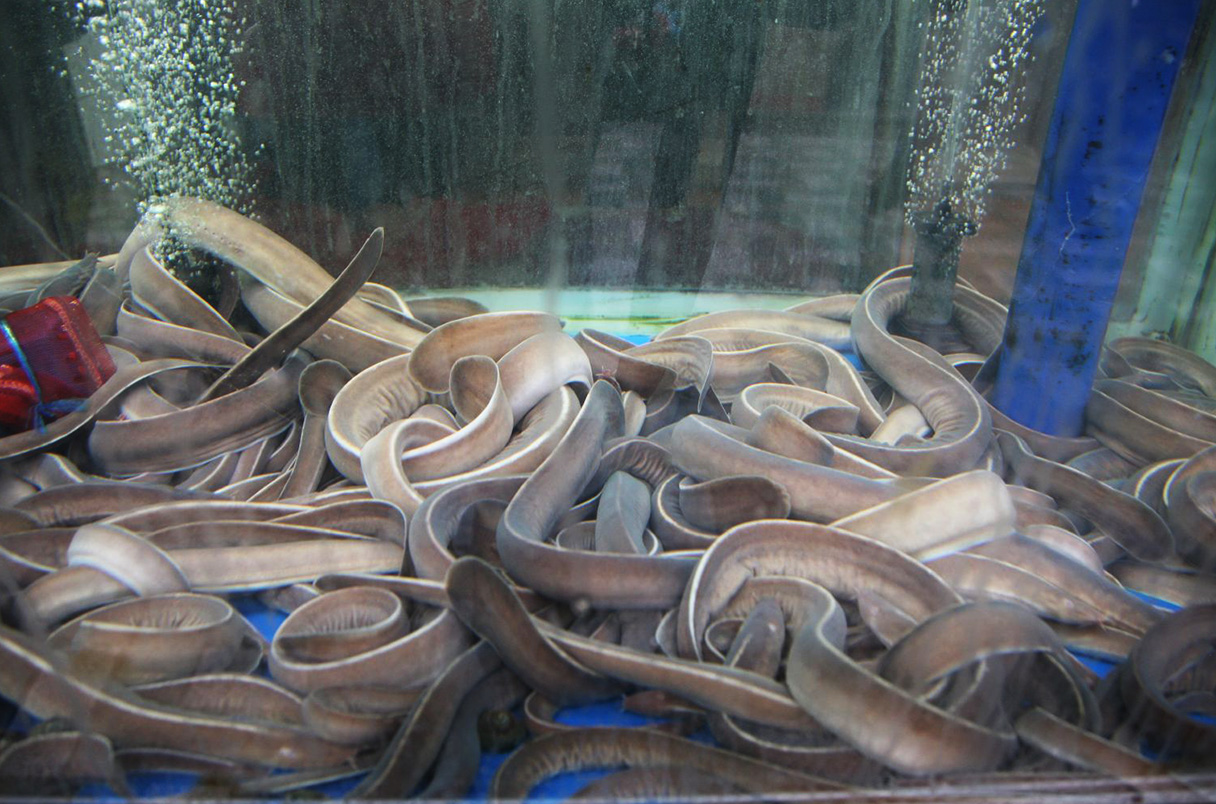
Hagfish, known for their eyeless faces and slimy bodies, have played a pivotal role in unraveling a significant evolutionary mystery—when vertebrate genomes underwent duplication and its consequences. Two independent research teams sequenced hagfish genomes, clarifying the timing of genomic upheavals in early vertebrate history. Published in Nature Ecology & Evolution and a preprint accepted at Nature, the findings challenge the notion that genome doubling drives species diversification. The research also suggests that early vertebrates, including hagfish, were more complex than previously believed.
Hagfish, as jawless vertebrates, lack eyes, jaws, paired fins, or legs, and possess a cartilaginous skeleton. By comparing their genomes with those of later vertebrates, researchers aimed to shed light on vertebrate evolution. Sequencing hagfish genomes proved challenging due to the species' unique genetic characteristics, such as discarding many chromosomes during development. The teams successfully isolated DNA from hagfish testes to obtain the genetic blueprints.
The results indicated two genome duplications in early vertebrate history, challenging the theory that duplications drive species diversification. The first duplication occurred before hagfish and lamprey branched off, while a subsequent tripling of genomes in cyclostomes, including hagfish, happened about 50 million years later. This period coincided with a genome doubling in the branch leading to other vertebrates. The data suggest that key vertebrate innovations, like a three-part brain and the neural crest tissue, appeared after the initial duplication, indicating earlier vertebrate complexity than previously thought.
While the second round of DNA expansion may have contributed to vertebrate diversification, the study revealed that cyclostomes' DNA expansion did not yield the same effect. The findings emphasize the diverse outcomes of genome duplications. Understanding these outcomes is crucial for comprehending how organisms evolve in response to their environment.
The hagfish genomes provide insights into the evolutionary changes in these unique creatures, highlighting genetic alterations related to slime production and the loss of genes for eyes, bone, and hormones. The study prompts questions about the adaptive advantage of certain systems in changing environments, adding depth to the understanding of genome evolution.
The research not only contributes to resolving evolutionary mysteries but also underscores the complex and varied outcomes associated with genome duplications across different species. Hagfish, with their peculiar traits, continue to offer valuable insights into the intricate tapestry of vertebrate evolution.
More: https://www.science.org/content/article/slimy-hagfish-help-solve-mysteries-genome-duplication
