


In a groundbreaking discovery, astronomers may have found a celestial descendant born from the remnants of the universe's inaugural stars, shedding light on the mysteries of their explosive existence. Positioned near the Milky Way, this cosmic heir, named J1010+2358, offers a unique glimpse into the aftermath of a first-generation star's demise.
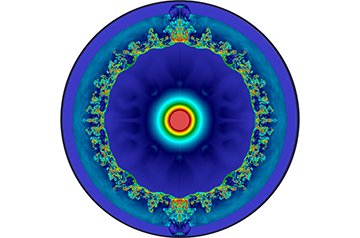
Astronomers, employing China's Large Sky Area Multi-Object Fibre Spectroscopic Telescope (LAMOST), identified J1010+2358 in the sparse halo of stars surrounding the Milky Way. Notably low in metals, the star exhibited distinct variations in elemental abundances—characteristic indicators of a rare "pair-instability" supernova, a catastrophic event theorized for stars with masses between 140 and 260 times that of the Sun.
This revelation holds the potential to unlock crucial details about the nature and size of the universe's initial stars, known as population III. These ancient giants, believed to consist mainly of hydrogen and helium, played a pivotal role in shaping the cosmos through their explosive deaths and the subsequent mixing of metals with hydrogen and helium in successive stellar generations.
As scientists aim to decipher the enigma surrounding the mass of population III stars, J1010+2358 provides a key piece of the puzzle. Preliminary analysis suggests it could be the descendant of a star weighing between 250 and 260 solar masses, favoring the theory of middle-weight population III stars. However, further investigations are underway to ascertain whether this discovery represents a typical example or an exceptional outlier.
While the challenges of directly observing these ancient stars persist, the study of descendants like J1010+2358 offers a promising avenue for unraveling the cosmic mysteries of the universe's formative years. As astronomers continue their quest for more celestial offspring, the intricate fingerprints left behind by these cosmic ancestors may hold the key to understanding the universe's evolutionary tale.
More: https://www.science.org/content/article/astronomers-home-offspring-universe-s-first-stars
