


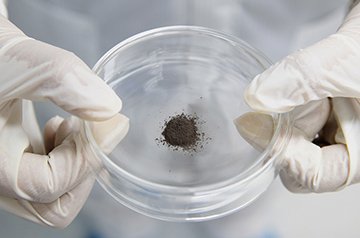
In a groundbreaking move, NASA is encouraging U.S. scientists to seek access to lunar soil and rock samples collected by China's Chang'e 5 mission in 2020, marking a potential breakthrough in U.S.-Chinese space research collaboration. This initiative, driven by the National Endowment for the Humanities (NEH), comes despite longstanding U.S. legislation prohibiting NASA funding for projects involving China, unless stringent conditions are met.
NASA recently communicated to planetary scientists that it has provided Congress with the necessary certification, enabling agency-funded researchers to apply to the China National Space Administration (CNSA) for research access to the Chang'e 5 samples. This opportunity holds the promise of yielding new scientific insights into the Moon's geological history, with potential implications for NASA's future lunar exploration plans.
The move has been met with excitement from the scientific community, with Clive Neal, a lunar scientist at the University of Notre Dame, calling it "huge." The ban on bilateral cooperation, known as the Wolf amendment, has historically hindered such collaborations. However, this certification specifically addresses the Chang'e 5 mission, providing a glimmer of hope for future joint endeavors.
While CNSA's approval of U.S. proposals is not guaranteed, the prospect of U.S. participation is viewed optimistically by experts. Long Xiao, a planetary geoscientist at the China University of Geosciences, anticipates positive outcomes for lunar science, emphasizing the remaining scientific questions surrounding Chang'e 5's material.
The Wolf amendment, introduced in 2011 to prevent technology transfer and address human rights concerns, has been criticized for impeding mutually beneficial cooperation. Makena Young, an aerospace security expert, has argued that the restrictions hinder collaborative efforts for science and exploration without achieving their intended goals.
Chang'e 5's significance lies in its use of home-grown technology, enabling China to retrieve lunar samples and become the third country, after the U.S. and the former Soviet Union, to achieve this feat. The CNSA strategically targeted a unique landing site, maximizing the scientific value of the returned materials.
The Chang'e 5 samples, distinct for being the first lunar materials returned to Earth since 1976, offer a rare opportunity to study lunar materials younger than 3 billion years. The samples, dated at 2 billion years old, present a unique window into the Moon's past. U.S. scientists, eager to contribute to this research, have already participated in studies through alternative funding sources.
While the recent authorization allows applying for Chang'e 5 samples, it does not dismantle the broader prohibition on bilateral activities with China on NASA-funded projects. Despite this limitation, U.S. researchers hope that this exception will set a precedent for future collaborations. Chang'e 6, scheduled for launch in May 2024, presents a potential continuation of this cooperative trend, aiming to return samples from the far side of the Moon.
As the space exploration landscape evolves, scientists express optimism about tearing down walls between countries and fostering international collaboration for the advancement of lunar science.
More: https://www.science.org/content/article/nasa-opens-door-cooperation-china-moon-rock-research
