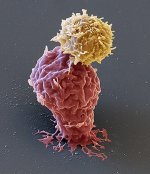
Genetically modified cells known as chimeric antigen receptor T (CAR-T) cells have become potent cancer fighters, and scientists are now studying them as treatments for autoimmune diseases and other illnesses. But making them involves harvesting and transforming a person’s immune cells—a process that can take so long that patients sometimes die before the therapy is ready.
A new approach induces the patient’s body to produce its own CAR-T cells, relying on the same messenger RNA (mRNA) technology that was instrumental for some COVID-19 vaccines. The tactic, reported by its developers today in Science, could cut the wait time for the treatment and possibly reduce its enormous cost.
“It’s a striking proof of concept,” says Yvonne Chen, a cancer immunotherapy researcher at the University of California, Los Angeles who wasn’t connected to the study. Still, she says, further research is necessary to assess the safety of the approach.