


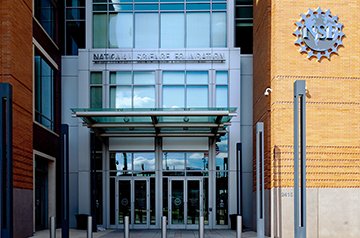
The National Science Foundation (NSF) said today it would sharply reduce overhead payments to universities receiving its grants. Federal judges have temporarily blocked earlier attempts by the National Institutes of Health (NIH) and the Department of Energy (DOE) to lower reimbursement of so-called indirect costs to 15%, and observers expect NSF’s identical proposal to meet the same fate.
“The third time is not a charm; rather, it is disaster in the making for American science & technology and our nation’s continuing competitiveness,” says Matt Owens of COGR, a coalition of 225 institutions that tracks federal regulatory policies affecting research. “Thankfully, the courts have thus far prevented earlier attempts to implement such ill-advised policies.”
NSF did not estimate how much the $9 billion agency would save from lowering the cap, which it said would be applied starting on 5 May to all grants awarded but is not retroactive. But NIH, with a budget five times larger, has said its identical proposal to cap overhead payments at an additional 15 cents per dollar of direct research funding would shrink payments to institutions by $4 billion.
A coalition of states, universities, and scientific organizations have argued successfully in federal court that NIH and DOE failed to follow the law in unilaterally announcing the change in indirect cost rates, which are negotiated individually and can reach three to four times the proposed 15% rate. The government has appealed the district judge’s ruling against NIH. The plaintiffs in the DOE case are hoping for a similar win before a different judge in the same Massachusetts court after having won a temporary restraining order.
