Who can replace the United States? The global health community has been asking that question since President Donald Trump’s administration took a sledgehammer to its foreign aid budget, dismantling the U.S. Agency for International Development (USAID) and ending thousands of grants. Health ministries across the developing world, nongovernmental organizations, and major multilateral funding organizations such as Gavi, the Vaccine Alliance are looking for alternative sources for the billions of dollars the U.S. has suddenly withdrawn.
They are mostly coming up empty. “X billion disappeared in global health, and we can’t replace it,” says Mitchell Warren, executive director of AVAC, a nonprofit focusing on HIV prevention and a lead plaintiff in a lawsuit against the U.S. government over its withdrawal of health aid.
The gap is huge. An analysis by the Institute for Health Metrics and Evaluation shows the U.S. provided roughly 32% of total global health funding. (The European Union and the United Kingdom together account for 22% and foundations and philanthropies for 17%; the rest comes from smaller contributions.) Exactly how much of that is now gone is still unclear, but estimates put the funding drop at $9 billion to $10 billion for the upcoming fiscal year alone, and $30 billion to $40 billion over the next 3 to 5 years.
Some projections warn that the losses will result in 15 million new cases of malaria and 107,000 deaths this year alone, and
3 million deaths from HIV by 2030, most of them in Africa. “Whether or not U.S. funding returns, other donors will need to step up, but so, too, must countries that have relied on U.S. financing, to the extent they can,” World Health Organization Director-General Tedros Adhanom Ghebreyesus said in a 17 March media briefing.
European countries won’t fill the breach. The three biggest donors after the U.S.—Germany, France, and the U.K.—have announced they will cut back on foreign aid, in part to make up for increased defense spending. DonorTracker, a project that monitors trends in countries’ foreign assistance, projects countries other than the U.S. will contribute $13.5 billion less in 2025 and 2026. Joanne Sonenshine, an independent expert on corporate fundraising, says she expects the Nordic countries and Australia to step forward, but so far none has made concrete offers.
Many philanthropies are reeling, says Charles Keidan, an independent philanthropy expert based in the U.K. Privately and publicly funded projects are often intertwined, he says, and the sudden withdrawal from U.S. aid has disrupted their efforts. “This is the biggest crisis I’ve seen in my lifetime, certainly within the philanthropy sector globally,” Keidan says. “It’s an existential crisis.”
Some foundations have said they will increase funding—somewhat. The John D. and Catherine T. MacArthur Foundation announced on 25 February it would spend at least 6% of its almost $9 billion endowment on programs including maternal health, climate, justice, and human rights in 2025 and 2026 to make up for lost federal funding. It called on other foundations to do the same. “The need for a surge in funding is plain,” MacArthur President John Palfrey wrote in a statement. “Philanthropy needs to step up.”
The Bill & Melinda Gates Foundation is spending more this year as well. On 15 January, the foundation announced a record budget of $8.74 billion for this year, and it made a further $750 million pledge to combat child malnutrition, hit hard by the retreat of USAID. That brings total spending this year to more than 12% of the foundation’s $75.2 billion endowment. Still, “There is no foundation—or group of foundations—that can provide the funding, workforce capacity, expertise, or leadership that the United States has historically provided” in the fight against disease and hunger, Rob Nabors, the foundation’s North America director, said in a recent statement. (The foundation did not answer specific questions from Science.)
Some had hoped for more generous commitments from philanthropies—and for a more vocal response to the frontal assault on the type of work they support. Bill Gates, for example, has reportedly discussed his concerns with U.S. government officials but has not publicly criticized the administration. “Too quiet, too slow,” is how Sonenshine describes the muted collective response. Keidan says most foundations are trying to stay out of the Trump administration’s crosshairs while they figure out how to respond.
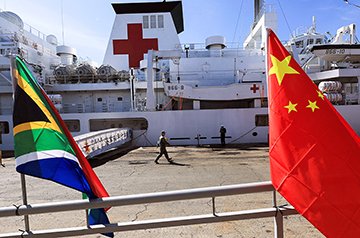
China, which has steadily expanded its global influence, is another source of potential funding. “For the first time in the decades I’ve worked in health development, I hear the question, ‘What about China?’” says Rosemary Mburu, executive director of WACI Health, an African health policy advocacy group.
Traditionally, China has focused its health investments on building infrastructure and dispatching medical teams to developing countries. “I think China is going to change somewhat now,” says Joshua Kurlantzick, a senior fellow for Southeast and South Asia at the Council on Foreign Relations. “China sees an opportunity here and in the past
10 years has started giving out more grant aid rather than just the investment loans of the past.” In 2020, for example, China committed $20 million to Gavi, and it has made pledges for vaccine distribution in Southeast Asia and maternal and child health in Bangladesh and Pakistan.
But these are small sums compared with what has been lost, including, for example, a $2.63 billion pledge to Gavi that the U.S. has indicated it will scratch. Mburu is skeptical of Chinese aid, noting that whereas U.S. aid has traditionally been seen as upholding human rights, China’s has tended to be more transactional.
Health economist Regina Ombam, who was appointed permanent secretary of trade in Kenya in late March, says African countries themselves need to step up instead. The COVID-19 pandemic—during which rich countries quickly gobbled up scarce vaccine supplies, leaving developing nations in the lurch—drove home the need for African countries to fund more of their own health needs, she said. “Don’t squander the insights from the pandemic,” Ombam says. “Push for true country ownership.”
John Nkengasong, former director of the Africa Centres for Disease Control and Prevention, has called for a “new public health order for Africa” since 2017. It would strengthen health systems on the continent, build up the health care workforce, and foster more equitable partnerships with donors. A brief published by the Center for Global Development on 27 March—which called the U.S. exit a “case study in volatility” of health funding—proposed a new “compact” with external donors in which African countries themselves set evidence-based priorities and increase domestic funding while “donors collaborate to provide ‘top-up’ funding.”
Several countries, including Rwanda and Ghana, have boosted health funding. But a full-scale transition will take a major effort, strong leadership, and time—and it won’t address the current crisis. “We are in the middle of a massive earthquake,” Mitchell says. “When buildings fall, we can’t just build back what we had before. We need a whole new global health funding architecture, but we won’t be able to build it fast enough to avoid significant harm.”