


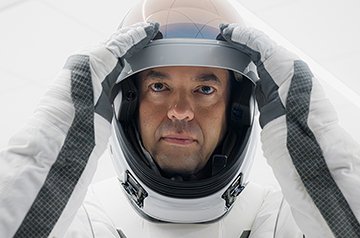
U.S. President-elect Donald Trump has chosen billionaire businessman and pilot Jared Isaacman as the next NASA administrator. The founder and CEO of Shift4, a payment processing company, Isaacman has twice paid to fly in space aboard capsules built by SpaceX, a rocket company led by Elon Musk, a close Trump ally.
“Jared will drive NASA’s mission of discovery and inspiration, paving the way for groundbreaking achievements in Space science, technology, and exploration,” said Trump in a December post on Truth Social.
If confirmed by the U.S. Senate, Isaacman, 41, would oversee NASA’s $25 billion budget, which includes roughly $7 billion for science. He would replace 82-year-old Bill Nelson, a former astronaut and senator from Florida. "We’ve gone nowhere since Apollo, because we keep changing destinations,” says Clive Neal, a lunar scientist at the University of Notre Dame. He says Isaacman will “have energy, which we haven’t seen in the last 4 years.”
The nomination is drawing praise even across the political aisle. Democrat George Whitesides, newly elected to the House of Representatives from California, said in an email he believes Isaacman will be “excellent.” Whitesides, who served as NASA’s chief of staff under former President Barack Obama and later was CEO of commercial space flight company Virgin Galactic, adds that Isaacman understands the breadth of NASA’s responsibilities, “from the cutting edge of aircraft research to ambitious human space flight, from studying the Earth system to robotic Solar System exploration.”
A high school dropout, Isaacman founded Shift4 in 1999. In 2011, he founded Draken International, which provides fighter aircraft and training services to military customers. A trained jet pilot himself, Isaacman paid SpaceX an undisclosed amount to orbit Earth in a Dragon capsule in 2021. Earlier this year, during a second flight aboard a Dragon capsule, he became the first private citizen to conduct a spacewalk. Data from those missions have been used in studies to understand the toll of space on astronauts’ health.
Isaacman is poised to strengthen NASA’s reliance on industry partners, but such an effort is sure to come with conflicts of interest. Isaacman has already purchased rides on two more space flights with SpaceX for the coming years, including the first crewed mission of SpaceX’s next-generation Starship rocket. Musk posted his congratulations to Isaacman on the social media platform X following the announcement.
Isaacman’s relationship with Musk would rear its head over and over again at the agency. SpaceX, which now launches most of NASA’s missions, is slated to use Starship to ferry astronauts to the lunar surface in the future. NASA has stuck with its plans to have Starship rendezvous with the agency’s Space Launch System (SLS) on these lunar missions, despite the NASA-developed rocket, a pet project of Nelson’s, costing billions of dollars per launch. Earlier this year, Isaacman was critical of the SLS on X.
Musk’s presence will also loom over the largest science mission currently being conducted by NASA, an effort to collect rock samples from Mars and return them to Earth. SpaceX is one of several companies that have submitted alternative plans for the mission, which in its current form would have cost as much as $11 billion and would not return samples until 2040. A committee is now choosing between these options, with a decision to be made in the next few months.
Isaacman may also influence NASA’s astronomy missions. In April, he wrote to Nelson to express support for the aging Chandra X-ray Observatory, which is facing proposed budget cuts that would render it inoperable. Isaacman wrote that reducing Chandra’s funding would amount to “ceding U.S. industrial leadership” and “a death spiral for X-ray astronomy in the United States.”
Other science missions at NASA have also been under financial siege since the pandemic, plagued by rising costs and budget cuts from Congress. Multiple missions have been delayed by years, including Dragonfly, an ambitious rotocopter that will land on Saturn’s moon, Titan, and two spacecraft that will visit Venus. Bethany Ehlmann, president of the Planetary Society and a planetary scientist at the California Institute of Technology, is thinking positively about Isaacman’s role in dealing with these challenges. “The scientific community looks forward to working with him to advance our exploration objectives,” she says.
NASA is also a powerhouse for studies of climate change, providing satellites and models that underpin data used by everyone from farmers to the oil-and-gas industry. Efforts by the previous Trump administration to cancel several climate science missions or otherwise interfere in the agency’s science faltered partially because of a strong alliance between its first administrator under Trump, Jim Bridenstine, and its science chief, Thomas Zurbuchen.
Isaacman will be under pressure from agency scientists and contractors to replicate that robust defense, says Waleed Abdalati, director of the Cooperative Institute for Research in Environmental Sciences at the University of Colorado Boulder and a former NASA chief scientist. If Isaacman behaves similarly to Bridenstine in defending earth science, he “will have my full support,” Abdalati says.
In a post today on X, Isaacman expressed his honor at the nomination and states that “this second space age has only just begun.” He described a vision for a “thriving space economy” that capitalizes on space manufacturing, biotechnology, mining, and new energy sources.
More: https://www.science.org/content/article/trump-picks-billionaire-astronaut-lead-nasa
