


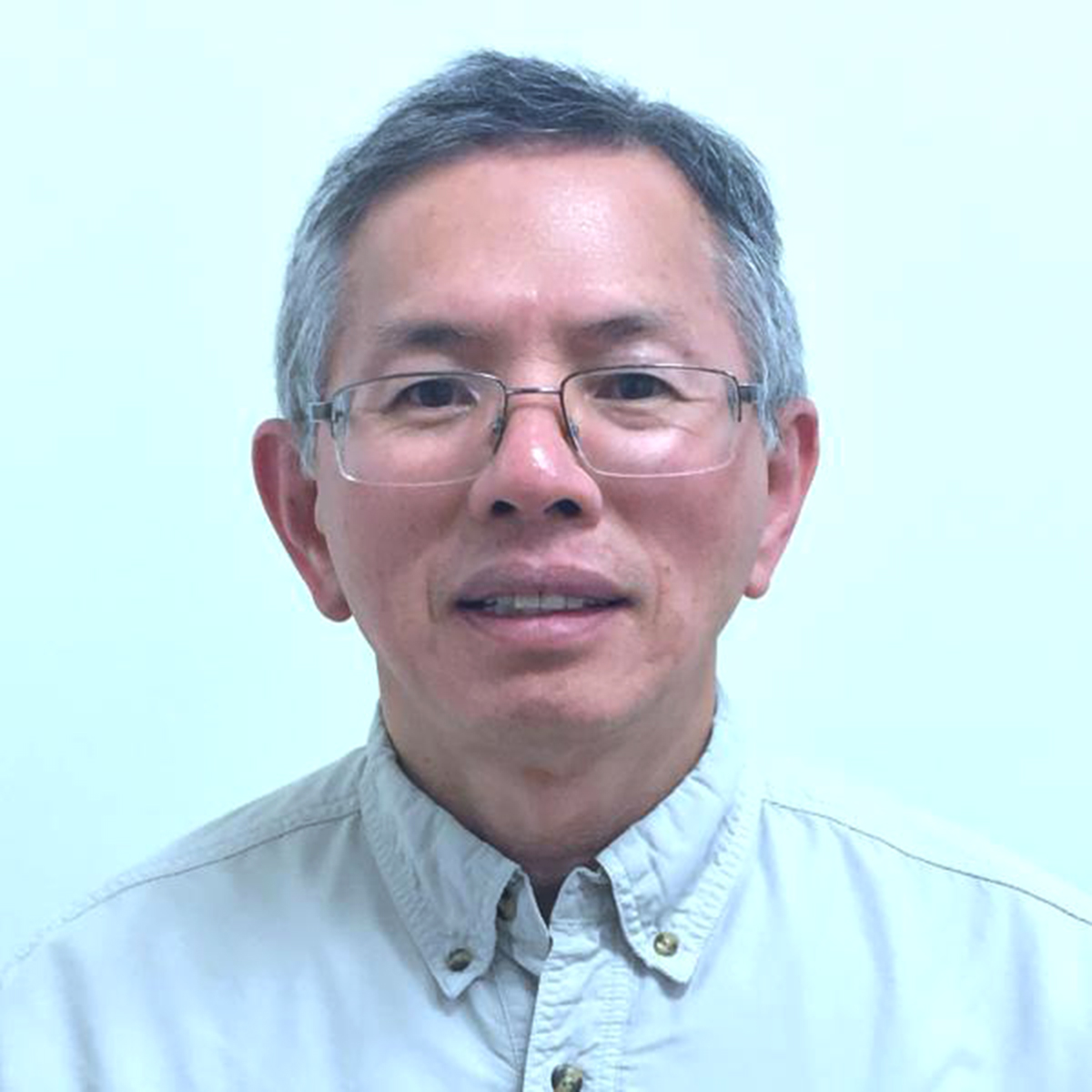
Federal authorities yesterday indicted a City University of New York (CUNY) scientist involved in drug development for Alzheimer’s disease for “defrauding the National Institutes of Health (NIH) of approximately $16 million” in grants, according to a Department of Justice (DOJ) press statement.
Hoau-Yan Wang had been under investigation by CUNY and federal authorities for more than 2 years for alleged fraud associated with his basic-science experiments, some of which underlie the controversial drug simufilam being developed by Cassava Sciences. Wang, a long-standing Cassava collaborator and paid adviser to the firm, had also in 2022 received a damning lab inspection report from the U.S. Food and Drug Administration. The agency harshly criticized his analyses of samples of blood and cerebrospinal fluid for a clinical trial of Cassava’s drug, which some scientists say calls into question its claimed efficacy.
Last year, Science reported that a CUNY investigative committee had found strong evidence of doctored images in Wang’s publications. That included a 2012 paper in The Journal of Neuroscience concluding that simufilam reduced toxic effects of beta amyloid, a protein whose abnormal build up in the brain is widely viewed as a cause of Alzheimer’s. The CUNY report also implicated Lindsay Burns, Cassava’s senior vice president for neuroscience and co-author on some of the same papers, as primarily or partially responsible for some possible errors or misconduct.
The committee, however, said it could not draw definitive conclusions about the integrity of Wang’s work because he could not or would not provide original data from his experiments. The panel nonetheless declared that he had engaged in “long-standing and egregious misconduct in data management and record keeping.”
Biochemist Kevin Gardner was among a group of CUNY scientists the school asked to write a preliminary assessment of Wang’s work. He called the subsequent investigative panel’s findings “embarrassing beyond words.” It reflected an “abhorrent” and “sickening” research record, Gardner added in comments to Science last year. After the report became public, CUNY put possible discipline against Wang on hold to review how it had been leaked to Science.
According to the DOJ release, Wang’s alleged fraud occurred between May 2015 and April 2023. It said he was involved in “a scheme to fabricate and falsify scientific data in grant applications made to the NIH on behalf of himself and the biopharmaceutical company.”
“Wang’s alleged scientific data falsification in the NIH grant applications related to how the proposed drug and diagnostic test were intended to work and the improvement of certain indicators associated with Alzheimer’s disease after treatment with the proposed drug,” the release noted. “Wang is charged with one count of major fraud against the United States, two counts of wire fraud, and one count of false statements.”
Wang and his attorney could not be reached for comment. If convicted, the scientist faces a possible 10 years in prison for major fraud, 20 years for each count of wire fraud, and 5 years for false statements.
The DOJ release says Wang “was” a tenured professor but it’s not clear whether that means CUNY has fired him or he has resigned. The school released a statement saying: “Today, CUNY learned of the indictment against Dr. Hoau-Yan Wang. The University has and will continue to cooperate to the fullest degree with the federal government’s investigation until the matter is resolved.”
In a statement of its own, Cassava called the CUNY scientist a “former” adviser. It also said, “Wang’s work under these grants was related to the early development phases of the Company’s drug candidate and diagnostic test,” adding that he “had no involvement in the Company’s Phase 3 clinical trials of simufilam.”
Simufilam has been the subject of heated disputes in the courts, as well as the scientific literature. Some studies by Wang and colleagues have been retracted or have received expressions of concern by journals, pending CUNY’s eventual action on its investigation of Wang.
Cassava’s stock price immediately plummeted after the DOJ release today, closing down 35%.
