


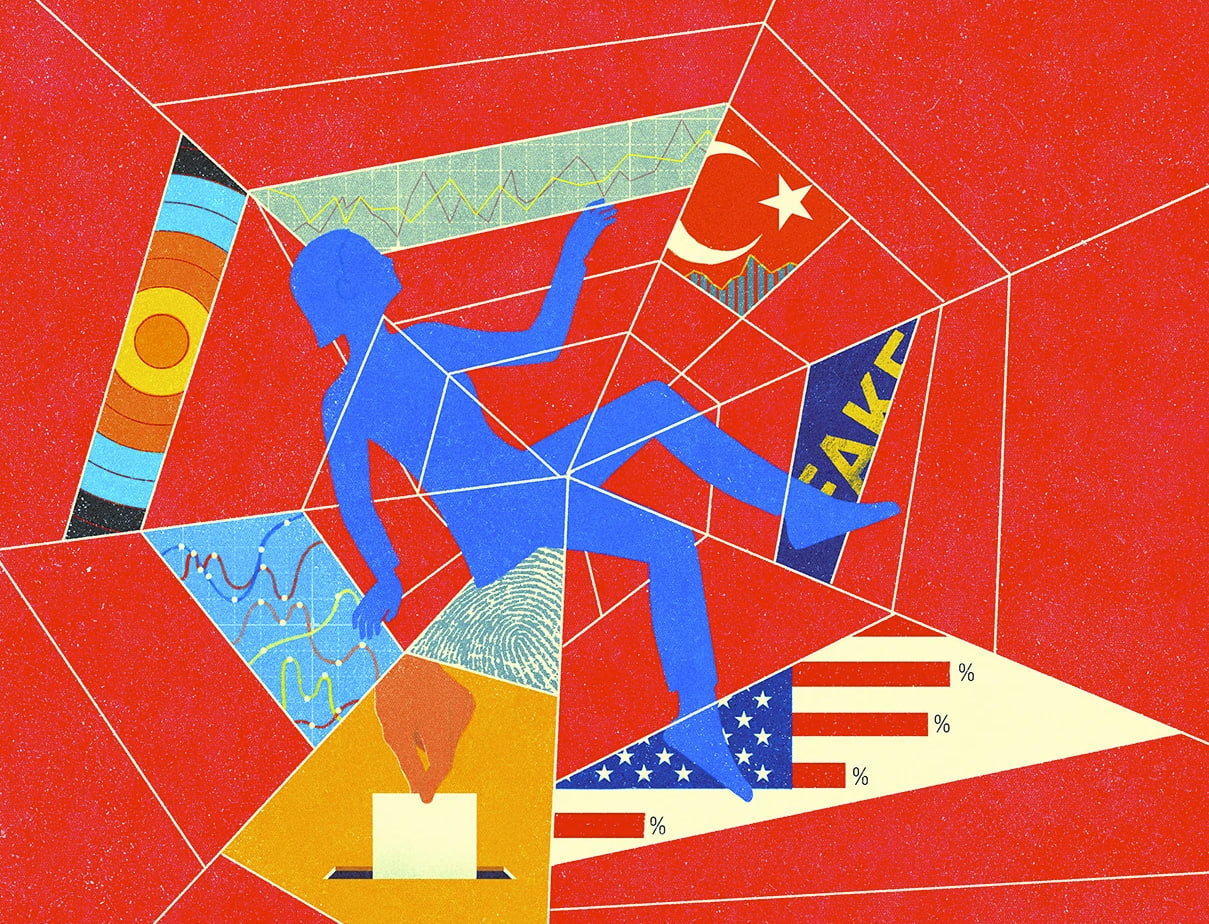
In the lead-up to the 2016 US presidential election, political misinformation surged, with 'fake news' — fabricated stories designed to influence the election outcome — spreading rapidly on social media. Unlike most, Kate Starbird, a computer scientist at the University of Washington, was equipped to tackle this issue. With a background in studying misinformation during crises, Starbird identified deliberate disinformation embedding itself in the structure of the Internet.
By the 2020 election, Starbird tracked the viral spread of over 300 fabricated narratives on Twitter, aimed at undermining the election's legitimacy. Following the publication of her findings, she faced a coordinated effort to discredit her work. She became a defendant in several high-profile lawsuits, testified in congressional hearings, and defended against accusations of colluding with the government to censor free speech. Additionally, she received numerous public-information requests, was sued for not responding promptly, and faced hostile media scrutiny.
Political scientists like Starbird, who investigate election processes and influencing factors, often become targets amidst growing political polarization in countries like the United States, Turkey, India, Poland, and Brazil. With nearly half of the world’s population living in countries holding elections in 2024, concerns about the erosion of democratic processes, including free and fair elections, are rising. India recently concluded its election, and the United States is set to vote in November.
Nature spoke with scientists worldwide whose work has thrust them into the public and political spotlight, often with severe consequences for their personal and professional lives. Many researchers find the situation increasingly untenable, especially where institutional support is lacking. "Institutional support is paramount," emphasizes Starbird.
