


Over the past 5 years, the U.S. Department of Justice (DOJ) has won only a handful of criminal cases in which it prosecuted scientists alleged to have defrauded the government by not disclosing research support they received from China. But last month DOJ sent a clear message that, despite that poor track record, research institutions will be held accountable for mistakes in monitoring outside support to their faculty.
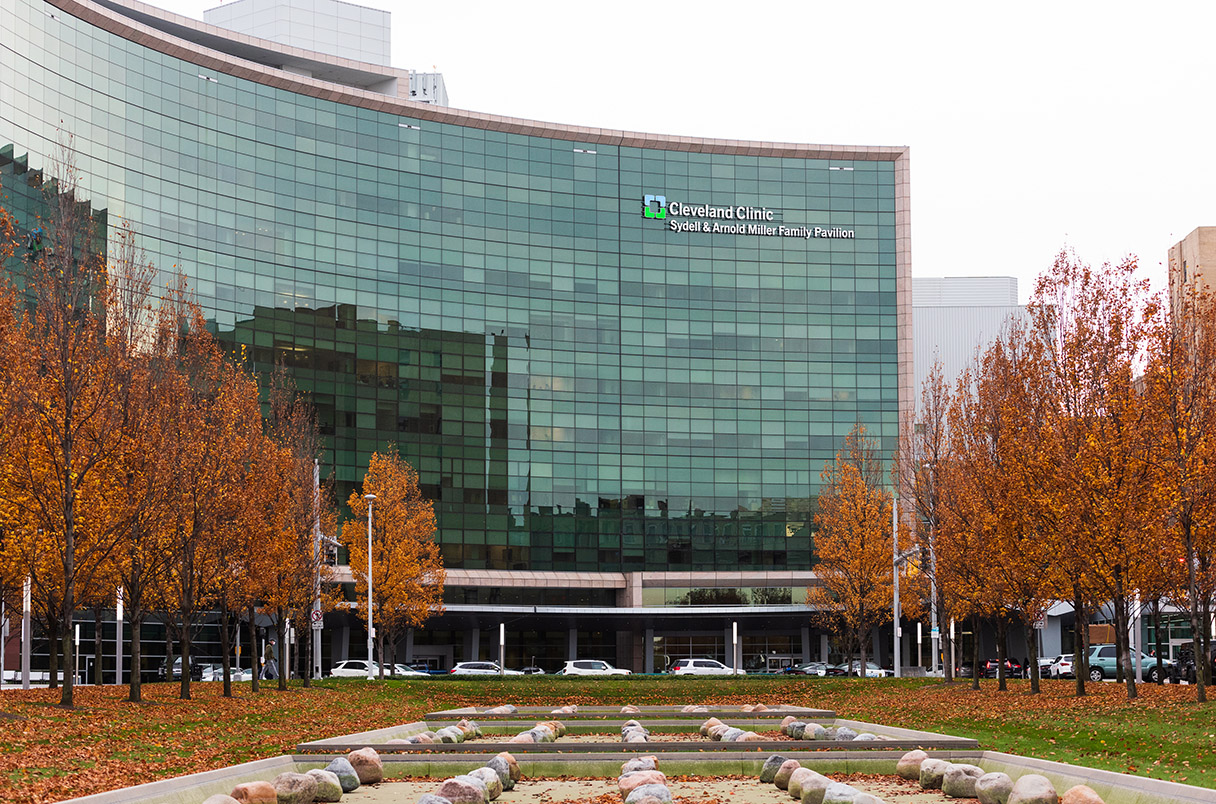
A 17 May settlement with the Cleveland Clinic Foundation (CCF) requires the medical colossus to pay the government $7.6 million to resolve allegations it mismanaged three grants from the National Institutes of Health (NIH). It’s a record amount for a case involving foreign research support, a mechanism U.S. policymakers believe China has used to steal U.S. technology. “Today’s settlement illustrates the importance of being truthful at every stage of the grants process,” U.S. Attorney Rebecca Lutzko said in a statement announcing the settlement.
In addition to the fine, the settlement requires a top CCF administrator “to personally attest” to the accuracy of all information it submits to NIH. “That is a very meaningful sanction or burden on an institution,” says attorney Michael Vernick of Akin Gump Strauss Hauer & Feld, who has represented research institutions in similar settlements but was not involved in the CCF case.
The CCF settlement was brought under a Civil War–era law called the False Claims Act (FCA), designed to prevent price gouging by government contractors. Since 2019, the law has been applied in a handful of cases to collect money from institutions accused of failing to properly monitor their researchers’ foreign ties. Experts on research compliance say the government’s use of the FCA to combat alleged attempts by China to obtain U.S. technology should be a wake-up call to every university receiving federal research dollars.
“When NIH and the Department of Justice looked at what the Cleveland Clinic had done, they saw no messaging or system in place that would cause people to change how they were doing things,” suggests Mary Millsaps, director of research compliance at North Carolina State University. “And having a high-level official be on the hook for all reporting is because they didn’t see leadership buy-in.”
CCF itself wasn’t the government’s initial target. In 2018, NIH began to investigate CCF cardiovascular geneticist Qing Wang after getting an FBI list of some 3000 scientists the agency believed had received funding through one of the many Chinese programs aimed at attracting world-class scientists, many of Chinese ancestry. A team in NIH’s office of extramural research crosschecked the FBI list with a roster of NIH-funded scientists and, when Wang’s name popped out, began to look at his publications for evidence he had not disclosed research support from China or that his work there was interfering with his research commitments to NIH.
In January 2019, NIH asked CCF to investigate those allegations and report back. In April 2020, CCF sent NIH a 17-page summary of its findings. Within days NIH suspended Wang’s $2.8 million grant and CCF terminated his employment. He was arrested on 13 May 2020, charged with making false claims in connection with the grant.
However, in July 2021 DOJ abruptly dropped its effort to prosecute him without explaining its decision. Wang, who grew up in China but trained in the United States and became a U.S. citizen in 2005, has restarted his research career at China’s Huazhong University of Science and Technology.
To Wang’s lawyer, Peter Zeidenberg, the reason the government threw in the towel is clear: His client had followed the rules and voluntarily disclosed his Chinese support. “He told them everything—both NIH and CCF,” says Zeidenberg, a partner with ArentFox Schiff LLP. The CCF settlement, he adds, simply confirms Wang’s innocence.
But DOJ’s lawyers may have had a different reason for abandoning its criminal prosecution of Wang. As cited in the settlement, DOJ had turned up evidence that CCF allowed employees to share passwords to gain access to NIH’s reporting system during the period covered by the targeted grant. Such unauthorized access, sources tell Science, meant it would have been impossible for the government to prove Wang had personally falsified any reports.
NIH’s evolving policy on reporting outside sources of funding also appears to have nudged the government to shift its focus from Wang to CCF. Institutions whose researchers apply for grants are obliged to tell NIH about “current and pending sources” of research, but until recently they believed those requirements only covered other federal grants that they managed. (Grants are technically awarded not to an individual, but to their institution, which is responsible for meeting all attached obligations.)
But in July 2019, NIH announced it needed to be told about all research support going to a grant applicant—not just federal grants but also in-kind support, grants from foreign governments, and funding for visiting scientists in their labs. NIH called it a reminder, but universities saw it as a major change. “It substantially raised the bar in terms of what grantmaking agencies expected to be disclosed,” Vernick says.
Whether the 2019 notice was simply a reminder or broke new ground, Millsaps and others speculate that DOJ pursued a settlement because it felt CCF hadn’t revised its practices to fit the new reality. “There’s probably additional egregious behavior that occurred,” Millsaps says. “Maybe the Cleveland Clinic didn’t cooperate [with DOJ] or take steps to make sure that their investigators understood their obligation to disclose.”
CCF denies wrongdoing and blames Wang for any violations of federal rules. “Any forms submitted to NIH by the Cleveland Clinic relating to Dr. Wang’s grants were based on information supplied by Dr. Wang, information the Cleveland Clinic did not know at the time was false,” it said in a statement when the settlement was announced. CCF declined further comment.
The CCF settlement eclipses two earlier civil settlements involving alleged nondisclosures between the government and the Van Andel Institute. In those 2019 and 2021 cases, totaling $6.6 million, the scientists involved in the grants were never criminally charged with any wrongdoing. But as with CCF, the second Van Andel settlement required a senior executive to sign off on all NIH submissions relating to “other support.”
Such personal scrutiny is not sustainable, Millsaps and other research administrators say, because of the large number of grants managed by a large institution such as CCF, the tight deadlines for most grant submissions, and the amount of information that the senior official would need to vet to ensure compliance. Rather, they think the requirement is NIH’s way of telling institutions to shape up.
“Universities should not be confused about what is expected of them,” Millsaps says. “But whether they have communicated that to the researchers is another question. Some are probably doing it better than others. But everybody needs to improve. Or they may be held liable.”
