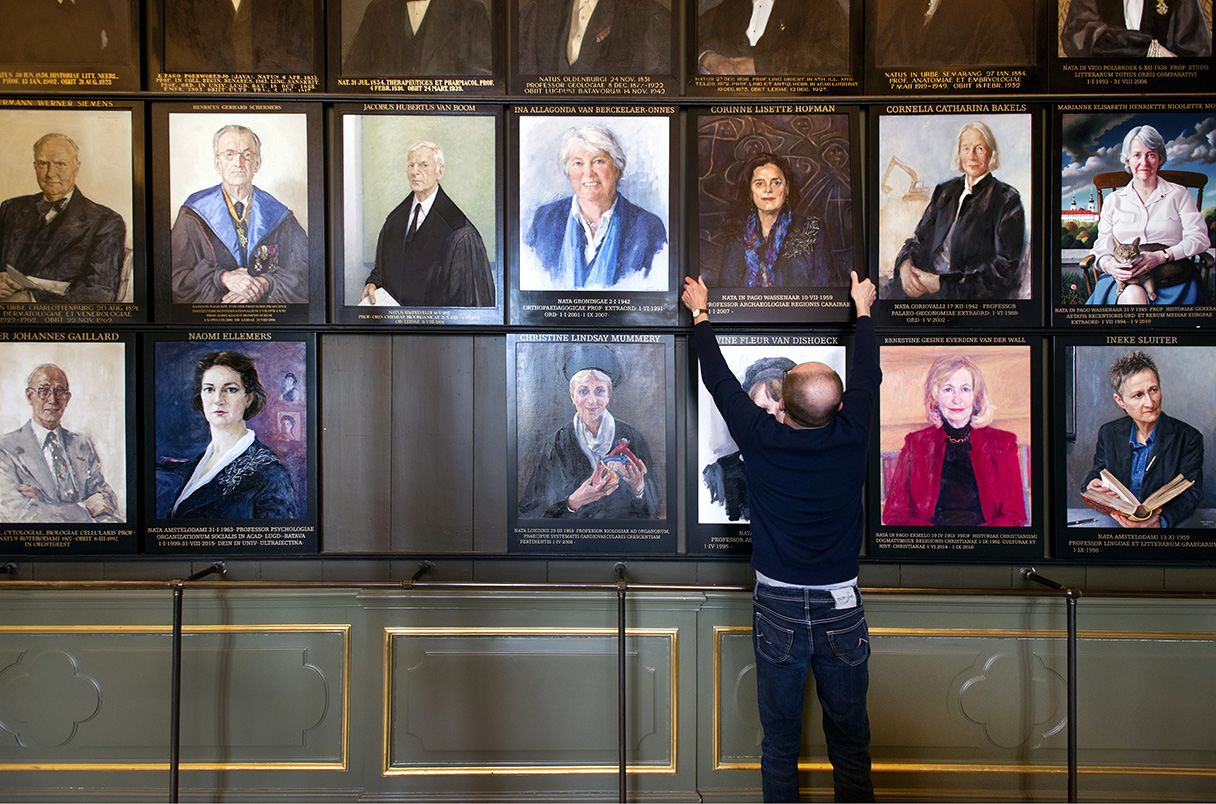
In 2009, during one of their research trips to the Caribbean, two Dutch archaeologists specializing in the Indigenous peoples of the region had a problem: They wanted to study the molars from skulls stored at a local depot but didn’t have a permit to extract them.
But Leiden University’s Corinne Hofman and Menno Hoogland, who are married, found a dubious workaround, according to testimony from three people recounted in an investigation the school released last week.
While Hofman chatted with a “local authority” to distract him, Hoogland and two Ph.D. students sneaked into the depot. Hoogland ordered the students to pull the molars out of the skulls; when they refused, he allegedly did so himself, “using tongs, a hammer, and a screwdriver, in a violent manner and disregarding generally accepted ethical and technical rules in the field of archaeology.” The testimony—which does not specify where the incident took place—says Hofman and Hoogland made off with the dental remains, which “was illegal and amounted to theft.”
It is just one of many alleged transgressions by Hofman, a full professor and former dean of Leiden’s archaeology faculty, and Hoogland, formerly a senior lecturer there. The couple also engaged in abuse of power, bullying, intimidation, aggression, and discrimination over a period of 30 years, often during field research, according to the school’s probe. A “culture of fear” ensured victims remained silent, it said.
The university’s three-member investigative panel, chaired by Yvonne Erkens, an associate professor in labor law, doesn’t identify the accused or their accusers in its report. But details in the text leave no doubt. It says, “Person A” was dean of Leiden’s archaeology faculty from 2013 to 2018, for example, which matches Hofman’s biography, and says she and “Person B” are married. (A story in Dutch newspaper NRC previously identified Hofman; Leiden’s independent newspaper, Mare, identified both her and Hoogland.)
The revelations put a new spotlight on field research, which can be prone to bullying, drinking, and harassment. They also shook the world of Caribbean archaeology. Hofman, who studies the region’s colonization from the viewpoint of the Caribbean Indian population, has hundreds of papers and book chapters to her name. She is among the roughly 600 members of the Royal Netherlands Academy of Arts and Sciences (KNAW), which calls her “one of the world’s leading archaeologists,” and has won several research prizes. The jury for the 2013 KNAW Merian Prize, an award for women scientists, called her “an inspiring role model” who “actively encourages talented female researchers to take up a career in academia.” Hofman used the €50,000 monetary award to support female Ph.D.s.
The report says Hofman and Hoogland “strongly reject” its allegations. Neither responded to Science’s interview requests, but their attorney, Petra Charbon, sent a statement on their behalf, saying it was “never our intention to cross any boundary of good behavior or good practice” and expressing profound regret if others had experienced their behavior that way. They said the publication of the report was “premature and unjustified” and “a violation of our privacy.”
Leiden announced the report’s main findings on 25 April, adding that it had started a procedure to terminate Hofman’s employment contract. The school said Hoogland, who is currently a “guest researcher,” is “also no longer welcome” there. The university’s executive board “is deeply shocked by the committee’s finding that serious misconduct could have persisted for so long,” the statement said.
The full report, which relied on statements from and interviews with three dozen people, paints a disturbing picture of how Hofman and Hoogland ran their research group. Staff members were humiliated, shouted at, mocked for being obese, or called “useless.” There were “elements of sexism” and “pregnancy discrimination” as well.
On field trips, Hofman and Hoogland sometimes engaged in “far-reaching and manipulative control,” for instance by limiting bathroom visits. Staff and students said they were encouraged to drink alcohol and participate in local nightlife but had too little food and drinking water, poor sleeping facilities, and excessive workloads. Women were insufficiently protected from sexual harassment. The couple had “flaming rows” that sometimes got physical, witnesses said. At one point, Hofman instructed staff to calm down her husband, who was “in a drunken and unmanageable state.”
The report also cites violations of academic integrity, including the alleged 2009 theft of the molars. In a similar incident in 2006, a member of their research team was allegedly instructed to extract teeth and molars from a collection of skulls abroad and bring them back to the Netherlands. There was no permit for such work.
“When I read that, I was like ‘Oh my gosh,’” says Carol Colaninno, an archaeologist at Emory University’s Center for Faculty Development and Excellence. “That’s definitely a big no-no.”
The witnesses told the investigators that Hofman and Hoogland sometimes withdrew access to data for no good reason, demanded co-authorships on papers they had not made a substantial contribution to, and didn’t properly credit other people’s work in their own papers.
Hofman and Hoogland suggested to the investigators that the complaints might stem from “jealousy and frustration” or personal animosity from the current dean. They also noted that “decolonization” has become a hot topic in archaeology and that—although she had worked hard to decolonize the field herself—Hofman might have become a target because she is a professor at a Western university. Much of the alleged abuse happened a long time ago, in a “different era” when it comes to professional behavior, the couple claimed. Hoogland added that side effects of medication he was taking between 2016 and 2023 affected his behavior. In addition, the couple provided statements from 59 people painting a very positive image of their work.
But the committee said the complaints against them, often expressed with “strong emotion,” were consistent and “largely convincing,” whereas the couple’s defense was “only very partially convincing.”
The report says the abuse was “largely attributable” to Hofman. Her husband’s role “is often that of an accomplice or facilitator,” it says, “or that of a closely involved colleague who could intervene but fails to do so.”
Colaninno says she is “not all that surprised” that a leading women researcher would behave in intimidating and even sexist ways. Archaeology has long had a “macho culture,” she says, and “as a woman you are sort of expected to adapt.” Field work in particular is often associated with heavy drinking and sexual harassment, and Colaninno heads a study of ways to make the experience safer, funded by the National Science Foundation. Data from the project are still being analyzed, she says.
A 2022 KNAW report co-authored by Erkens called Dutch policies to combat inappropriate behavior in academia “inadequate” and offered institutions advice on how to improve safeguards. Dutch universities have since announced new policies, as has Robbert Dijkgraaf, minister of education, culture and research. “But the essence of the report is that we need a culture change,” says co-author Sandra Groeneveld, a professor in public management at Leiden. “That’s hard work and it takes many years.”
The release of the full—though anonymized—report is a start, some observers say. And it marks a turnaround for Leiden. A similarly damning report about abusive behavior by Leiden astronomer Tim de Zeeuw, who was forced to leave the university in 2022, was never made public.