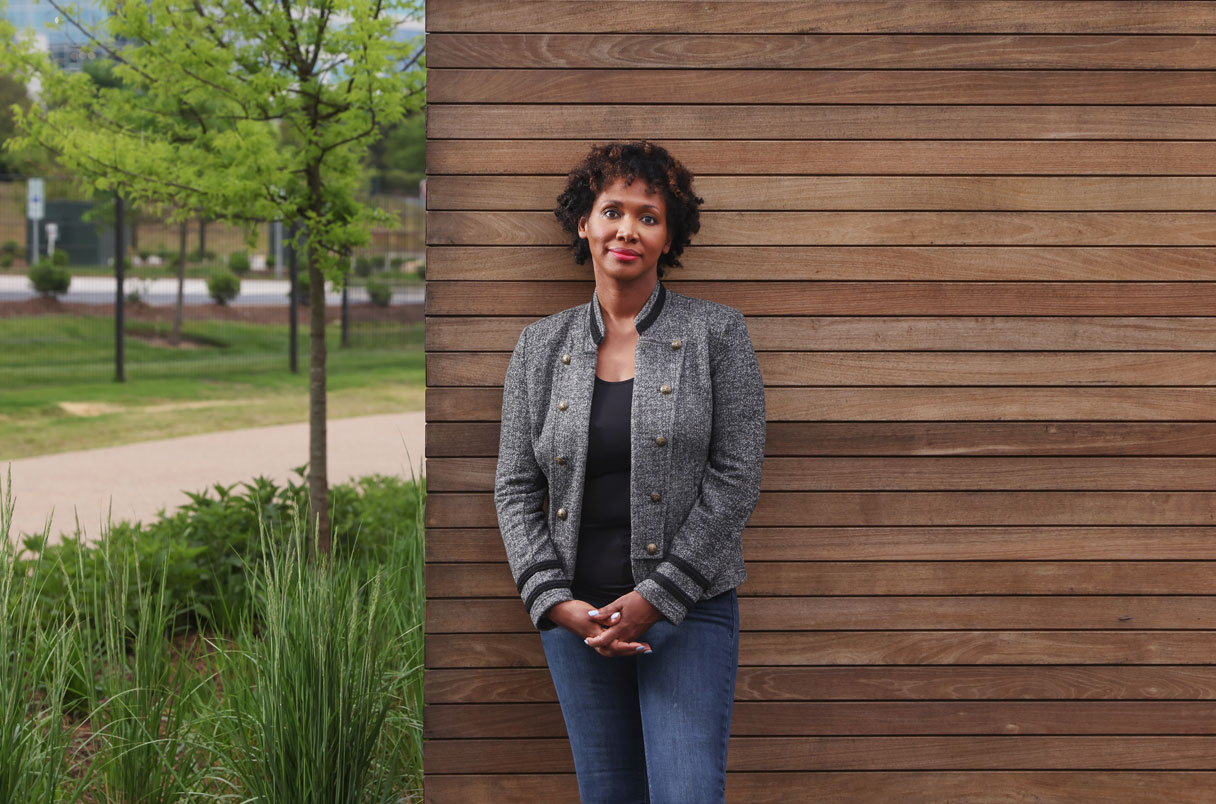
PARIS—Twelve years ago, after J. Norward’s life hit a rough patch and she lost her job in human resources, a friend suggested an unusual way to earn some money: Become a paid volunteer in a drug safety study. Norward, who for privacy reasons asked Science not to use her first name, agreed, and before long, it had become a way to make a living. She would travel from her home in North Carolina to whichever clinic or hospital needed volunteers for a trial. “Baltimore, Chicago,” she says. “Connecticut. Wisconsin. Tennessee. Ohio. Everywhere.”
Often she had to stay for a week or more, but the pay was pretty good, Norward says. Once she made about $9000 for a trial that lasted more than a month, including Christmas. She also met some great fellow volunteers, including a poet and a man who used his trial fees to start a trucking business. But it wasn’t an easy life. During one trial, her heart started pounding and she had terrible sweats—signs of a hypertensive crisis, she later learned. In another, she fell ill with flulike symptoms, but rather than being taken out of the trial, she was put in isolation so she could finish the study. Twice, “I was the only woman, and had to share a room with a bunch of men,” she recalls. “I was worried about my safety.”
Over the past 2 years, an international group of ethicists, scientists, regulators, and other stakeholders has sought ways to better protect people like Norward, who join trials as paid, healthy volunteers rather than as patients hoping for an effective treatment. The existing edifice of research ethics—including the Declaration of Helsinki and guidelines from the Council for International Organizations of Medical Sciences (CIOMS)—offers few specific safeguards for such people, researchers say. At a meeting here on 18 and 19 April, some 90 people from two dozen countries—including Norward—discussed a draft Global Ethics Charter intended to fill the gap.
The project is particularly concerned about phase 1 trials, studies in small numbers of people to establish the safety of a drug, find the right dose, or track how it is broken down in the body. Unlike patients who join later, phase 2 or 3 trials that test efficacy, the vast majority of people in phase 1 studies can’t expect any medical benefits—they’re in it for the money. They also have unique vulnerabilities. Many come from marginalized groups or are poor. Some are homeless or former prison inmates.
Phase 1 studies are often “really burdensome,” says Jill Fisher, a social medicine professor at the University of North Carolina at Chapel Hill who last year published a book titled Adverse Events: Race, Inequality, and the Testing of New Pharmaceuticals. Participants are typically confined for the duration of the study so they can be monitored closely and provide regular blood and urine samples. Most studies are sponsored by the pharmaceutical industry but run by so-called contract research organizations (CROs), whose study sites aren’t always up to standards. “Some volunteers have had absolutely terrible experiences with untrained staff and abysmal conditions,” Fisher says.
Moreover, the risks of phase 1 studies are typically higher than in phase 2 or 3, especially when a drug has never been tried in humans before. (Phase 1 bioequivalence studies, which seek to establish that a generic drug has the same profile as the original one, are less risky.) “Healthy volunteers don’t think about the risk—they only think about the money,” says Roberto Abadie, a medical anthropologist at the University of Nebraska–Lincoln who published a book about a group of self-described “professional guinea pigs” in Philadelphia in 2003. (Some had taken part in more than 80 trials.) “There are a lot of things that are exploitative and troublesome from an ethical point of view,” Abadie says.
Just how many trials use these volunteers every year is unclear. A rough inventory of a clinical trial database run by the U.S. government, carried out in 2022 by François Bompart of the Drugs for Neglected Diseases initiative, found at least 13,000 ongoing studies of drugs, biologics, or devices involving healthy volunteers. Half took place in the United States, 20% in Europe, and 15% in Asia. The real number is likely higher, Bompart says, because reporting phase 1 studies publicly is not mandatory. Most outcomes are not published, and research on the topic itself is scant. “It’s completely hidden from public view,” Fisher says.
Professional trial participants tend not to talk much about their experience either. Norward, who says she averaged about six trials per year, told very few people what she was doing at the time. “I was ashamed,” she says. “Many healthy volunteers feel they are prostituting themselves,” says medical sociologist Shadreck Mwale of the University of West London, who studied them in the United Kingdom.
When phase 1 studies do draw the spotlight, it’s usually because something went terribly wrong. In 2006, six previously healthy people in London became critically ill shortly after receiving an experimental anti-body named TGN1412, developed to treat a range of inflammatory and autoimmune diseases. One lost parts of his fingers and toes. In 2016, one man died and five others became seriously ill in Rennes, France, after receiving a candidate drug that acts on the body’s endocannabinoid system.
The project to establish a set of global standards for healthy volunteers, dubbed VolREthics, was launched in 2022 by members of the Ethics Committee at France’s national biomedical research agency, INSERM. They convened a series of meetings, and a coordinating committee that includes Fisher and Bompart published a draft of the ethical charter for public comment in February. A revised five-page version was discussed at the meeting.
It would require mandatory inspections of trial sites and reviews of staff credentials; systems for posttrial follow-up to monitor for long-term adverse events; and adequate space, telephones, and Wi-Fi for volunteers. So-called completion bonuses, given at the end of a study to prevent dropouts, should be “modest,” the document says, because they are an incentive to conceal adverse events and other health problems.
The draft also urges countries to implement a mandatory registration system to prevent people from joining too many trials. The system, already in place in France, Malaysia, and a few other countries, not only protects participants, but also makes for better studies, Bompart says. The data could be unreliable if volunteers join multiple trials at the same time or don’t observe the mandatory “washout” period for drugs to leave their body after a study.
Industry is generally not opposed to the idea of a charter, says INSERM’s François Hirsch, perhaps because it could help improve the image of what is sometimes seen as a shady business. “They are not afraid of what we are proposing,” Hirsch says. Deepa Arora, CEO of an Indian CRO named Clinexel, who attended the meeting, says she welcomes clear guidelines.
Elhassan Elkarimi of Morocco’s Anti-Poison & Pharmacovigilance Center also applauded the idea but would like the text to offer more specific guidance: for example, a ban on research on prisoners—which were widely used as subjects in the past—healthy children, and pregnant women. But Udo Schüklenk, a bioethicist at Queen’s University in Canada and editor-in-chief of Bioethics, was a dissenter, arguing that current guidelines already provide enough protection. Yet another ethical document will make life “miserable and difficult” for medical journal editors who need to verify whether manuscripts are compliant, Schüklenk says, especially when the charter diverges from national laws or regulations.
The coordinating committee will soon finalize the charter and share it widely, Bompart says. He hopes it will inspire national regulators and trial sponsors to shore up protections, and “would love it” if elements of the text end up in the Declaration of Helsinki or the CIOMS guidelines.
For her part, Norward calls the charter “a great blueprint.” After completing at least 20 trials, she stopped being a volunteer in 2016 and became a registered nurse. The experience shook her confidence in pharmaceutical research, she says, but it also kindled her interest in science. She’s planning to get a master’s degree in nursing and, eventually, a Ph.D.
And she’s no longer ashamed. “I did an Ebola study, a malaria study. I’m proud to say I helped in some way,” Norward says. “I don’t regret anything, but I do worry about people still doing the studies.”