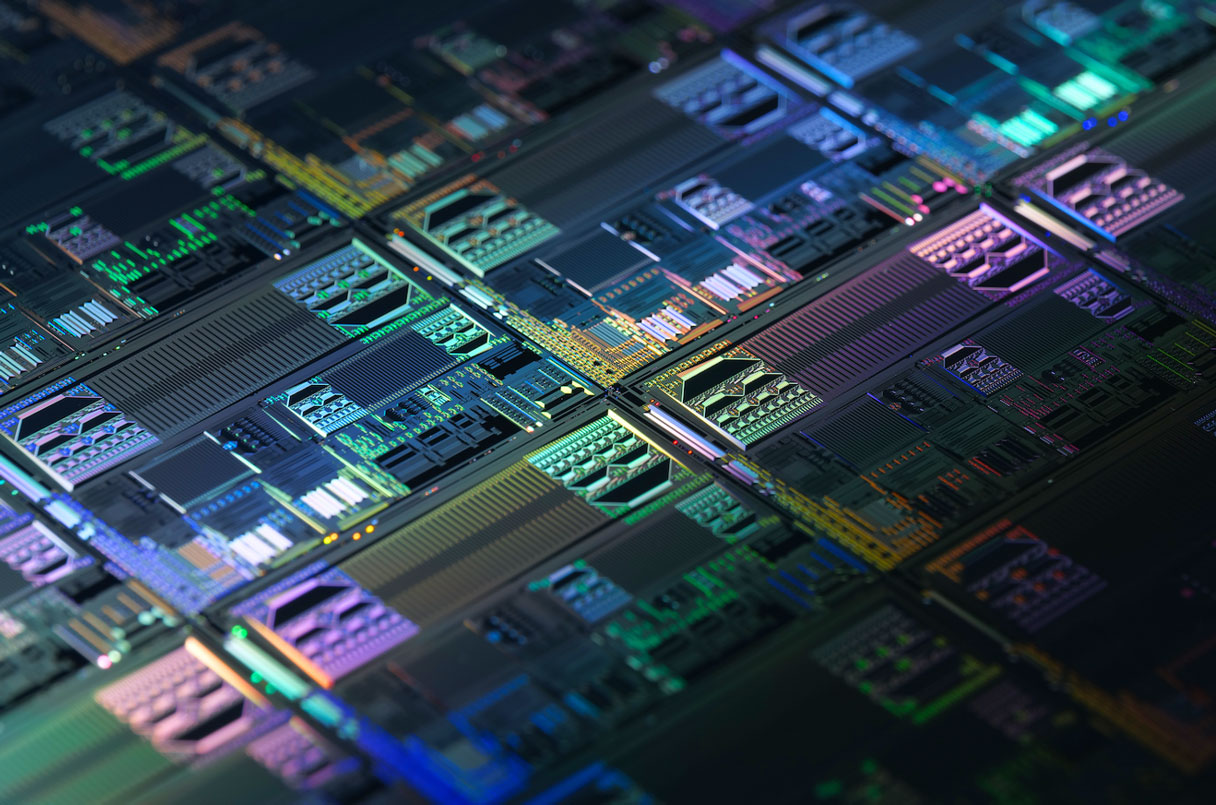
In the global race to build a fully functional quantum computer, Australia has wagered heavily on a company developing a dark-horse technology. The Australian national government and the state of Queensland will invest AU$940 million (about $620 million) in PsiQuantum, a 9-year-old Silicon Valley startup, the company announced last week. PsiQuantum will build a facility in Brisbane to house a computer that uses photons as the quantum bits or qubits that encode information, instead of the atoms, ions, or tiny circuits of superconducting metal on which higher profile approaches to quantum computing rely.
“It’s a gamble,” says Raymond Laflamme, a theoretical physicist at the University of Waterloo. However, Australia’s chief scientist, Cathy Foley, says it’s one worth taking. The project will ensure “we are at the front of the pack in the global race to build the first useful quantum computer,” she said in a statement. “We need to do this now; otherwise we will be left behind.”
Australia is playing to its strengths in quantum theory and photonics, notes Irfan Siddiqi, a physicist at the University of California, Berkeley. Two of PsiQuantum’s four founders are Australian. Australian officials, Siddiqi suggests, are “saying, ‘Probably a lot of these things in quantum are going to work, so we might as well try one where we have a unique advantage.’”
A fully functional quantum computer could solve problems that would overwhelm any conventional supercomputer. Whereas the bits in a conventional computer must be set to either 0 or 1, a quantum computer’s qubits can be 0 and 1 at the same time, although when measured that state collapses to 0 or 1. Multiple qubits can be “entangled” so that even while the state of each remains completely uncertain, the states of all the qubits are perfectly correlated. Then, for example, if one is measured and collapses to 0, the others will collapse the same way, too. For certain types of problems, potential solutions can be thought of as quantum waves sloshing among the qubits. The waves interfere so wrong solutions cancel one another out and only the correct one remains.
A qubit can be anything that has two quantum states to denote 0 and 1 and can interact with its siblings in a controlled way. For a photon, those states can be its polarization—horizontal or vertical—or even which of two paths in an optical circuit it takes. The circuits for a photonic quantum computer can be etched onto microchips and connected with optical fibers, says Terry Rudolph, chief architect at PsiQuantum and a theoretical physicist at Imperial College London. Because it exploits that familiar technology, he says, “the final machine is copying and pasting of a bunch of stuff.”
Less helpfully, photons barely interact with one another. They can be made to do so with a beam splitter, a half-silvered mirror set at an angle that will, with equal probability, transmit a photon or deflect it by 90°. When two photons traveling in perpendicular directions strike the mirror from opposite sides, one might expect that half the time the photons will emerge still traveling in perpendicular directions, because both were transmitted or both reflected. However, quantum mechanics dictates that each photon will be both transmitted and reflected. Those two-way states interfere so that both photons exit in the same direction, in an entangled state.
Physicists knew that this effect could be used to perform a single logical operation, or gate, on photons shot through a small maze of mirrors, beam splitters, and other optical elements. However, the process would yield the right output in only a fraction of trials. For a complex computation involving many gates, the number of trials would explode exponentially.
In 2001 Laflamme; Emanuel Knill, now at the U.S. National Institute of Standards and Technology; and Gerard Milburn of the University of Queensland found a way around the problem. “The funny thing is when [Knill] and I started on this, we wanted to show that it would never work,” Laflamme says. Instead, the three theorists found that a technique called quantum teleportation, which transfers the state of one qubit to another, could in some cases create an initial state of the qubits on which the gates were sure to work. Preparing this state would still succeed only sometimes, Laflamme says, but the computation as a whole would require far fewer trials.
Inspired by that work, the PsiQuantum team later found a different way to make the computations even more efficient, ironically by leveraging the mass of extra circuitry inevitably needed to correct errors among the qubits. “We go directly for the error correcting codes and we skip all the kind of intermediate things that Knill, Laflamme, and Milburn, and many other people did in academia,” Rudolph says. “That’s really what’s given us a big leap.”
Rudolph wouldn’t say how PsiQuantum’s progress compares with efforts based on other technologies, which have manipulated hundreds of qubits. Nevertheless, by 2027, PsiQuantum plans to build a quantum version of a supercomputing facility, with racks and racks of processors. It will also include a plant to liquify helium to cool the chips so the photon-counting detectors on them work.
Some experts question whether PsiQuantum’s technology is ready to scale up. Still, even if the company’s effort does not advance as planned, Australia’s investment in “the ecosystem of people making the wires and the lasers and the fab and all of that” will pay off, Siddiqi predicts. “It doesn’t matter what you produce in the end because [the] government has trained people in a good industry that’s moving forward.”