


Interior Department boosts restoration
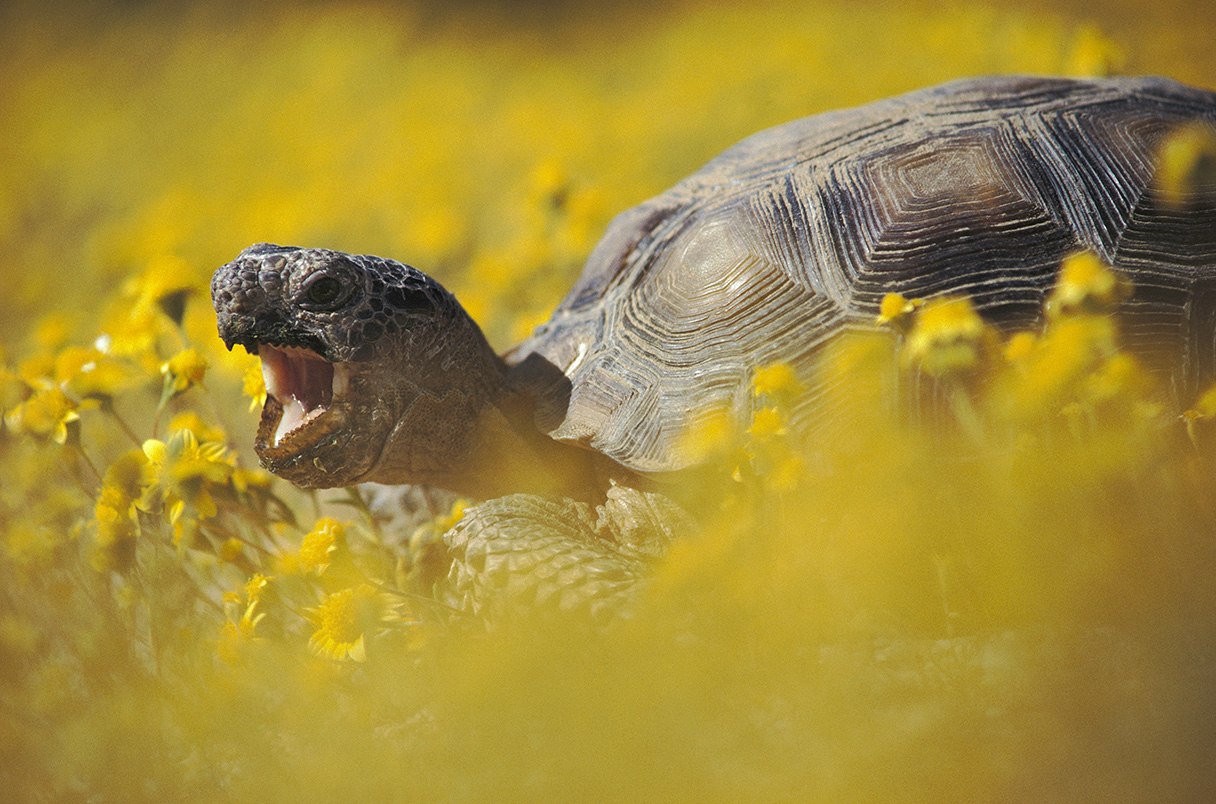
The largest manager of public lands in the United States last week announced it will manage them to promote ecological stewardship, while continuing to allow extractive commercial uses such as mining, oil drilling, and cattle grazing. The Bureau of Land Management (BLM) oversees nearly 1 million square kilometers of federal land, about 10% of the country’s landmass, mostly in Western states. Under a rule issued on 18 April, BLM will now assess the ecological condition of all hectares it manages, not just grazing land. The agency will also offer leases for restoration of federal land damaged by wildfire, invasive species, and other kinds of degradation. Developers can purchase these leases to compensate for their activities elsewhere that damage habitat, as U.S. agencies sometimes require when granting permits for projects on public or private land.
Are even insects conscious?
Thirty-nine scientists and philosophers have signed a declaration stating all vertebrates and some invertebrates may experience consciousness—and, consequentially, humans should weigh actions that threaten their welfare. The New York Declaration on Animal Consciousness, unveiled last week at a conference at New York University, cites “strong scientific support” that nonhuman mammals and birds not only experience sensory stimuli, but are also conscious of pleasure, pain, and fear. It adds that sentience is “a realistic possibility” in all other vertebrates—reptiles, amphibians, and fishes—and certain invertebrates, “including, at minimum” insects, cephalopods (such as octopuses and squids), and decapods (such as lobsters and crabs). For example, scientists have observed bees appearing to engage in play. A commentary accompanying the declaration calls for expanding such research and considering results in regulatory decisions, such as whether to allow octopus farming.
Colorado protects brain data
Colorado last week became the first U.S. state to enact privacy restrictions on the use of data from commercial neurotechnology devices, which record brain activity to monitor and improve mental health and productivity or to control other gadgets, for example. Such data may contain sensitive personal information about what a person is thinking or feeling. Although federal law already protects neural data from clinical patients, this update to an existing state law extends protections to nonclinical settings, giving consumers the right to view, delete, and correct their data. Companies must also obtain explicit consumer consent to use or sell the data. The University of Denver says the bill could limit private universities’ ability to use the devices in research and teaching, putting them at a disadvantage compared with public ones, which are exempt from the new restrictions. Colorado joins countries such as Chile, France, Mexico, and Spain that have enacted such laws or established frameworks for doing so. California and Minnesota are considering similar legislation for such technologies, which are driving a growing industry.
EPA regulates ‘forever chemicals’
In a major change, the United States will require polluters to monitor leaks and spills of two common, toxic “forever” chemicals—broadly known as PFAS—and clean them up. The Environmental Protection Agency (EPA) last week announced that companies that made or used PFOA (perfluorooctanoic acid) and PFOS (perfluorooctanesulfonic acid) will be the focus of enforcement. Manufacturers have voluntarily phased out sales of PFOA and PFOS, which are suspected human carcinogens, but they persist in groundwater. Earlier this month, EPA directed municipal utilities to remove these two chemicals, and four others in the PFAS class, from drinking water by 2029. The agency figures this will cost $1.5 billion per year; water utilities say the cost might be double that. EPA estimates that 770 PFAS compounds are still used in household and industrial products in the U.S.
U.S., Canada hike postdoc pay
The U.S. National Institutes of Health (NIH) and Canada’s government have provided raises for postdoctoral researchers in their respective countries. This week, NIH announced it will pay postdocs receiving its Ruth L. Kirschstein National Research Service Awards at least $61,008, an increase of $4500 over the current minimum. (Graduate students will receive a $1000 raise, bringing their minimum to $28,224.) NIH also announced a $500 increase in child care subsidies for early-career researchers who are parents. But the raise for postdocs is less than that recommended last year by the NIH director’s advisory committee following reports about a shortage of postdoc applicants; it recommended they be paid a minimum of $70,000 this year. Current pay levels “are not commensurate with their education and expertise,” the panel said. NIH noted a “constrained budget environment” but said it plans to reach a starting pay level of $70,000 for postdocs in the next 3 to 5 years, pending sufficient congressional appropriations. Last week, Canadian Prime Minister Justin Trudeau’s Liberal government increased salaries for postdocs receiving federally funded fellowships to at least CA$70,000 (about $51,200) annually, up from the current minimum of CA$45,000 and the largest increase in 20 years. The move drew praise from Support Our Science, which has staged protests across Canada to request higher pay for early-career researchers.
Plant tree of life gets filled in
Almost 300 biologists have banded together and redrawn the tree of life for flowering plants, enabling a 15-fold increase in the number of genuses represented and highlighting new milestones in diversification. Previous phylogenies depended on DNA from chloroplasts. The team instead applied new genomic methods that allow ready sequencing of nuclear DNA from herbarium specimens, they reported on 24 April in Nature. Researchers compared 353 genes from more than 9500 species, including 800 that had never been sequenced and a few extinct ones. The team detected two surges in diversification, one about 150 million years ago that yielded about 80% of modern plant groups, and another about 40 million years ago, possibly driven by insect interactions or a cooling climate. The analysis covers all 64 orders as well as the 416 families that make up the 330,000 known angiosperm species. By providing a richer taxonomy of flowering plants, which constitute about 90% of all known plant species, the study may enhance discovery of plants with medicinal properties and offer insight into countering plant pests and diseases, the authors say.
Bat waste poses disease threat
Researchers have discovered a new avenue by which viruses may spread from bats to other mammals: in bat guano eaten by chimpanzees and other animals. The scientists were observing chimps in Uganda’s Budongo Forest Reserve in 2017 when some scooped dry bat feces from under a hollow tree and devoured it—the first time the behavior was observed in any mammal. (The scientists later also saw monkeys and antelopes snacking on the droppings.) The guano contained dozens of previously unknown viruses, including a new coronavirus, a relative of the SARS-CoV-2 virus that causes COVID-19, the research team reports this week in Communications Biology. They don’t know whether the animals became sick. Many deadly viruses that infect animals and can jump to humans, including Ebola, Marburg, and SARS-CoV-2, are thought to originate in bats.
