


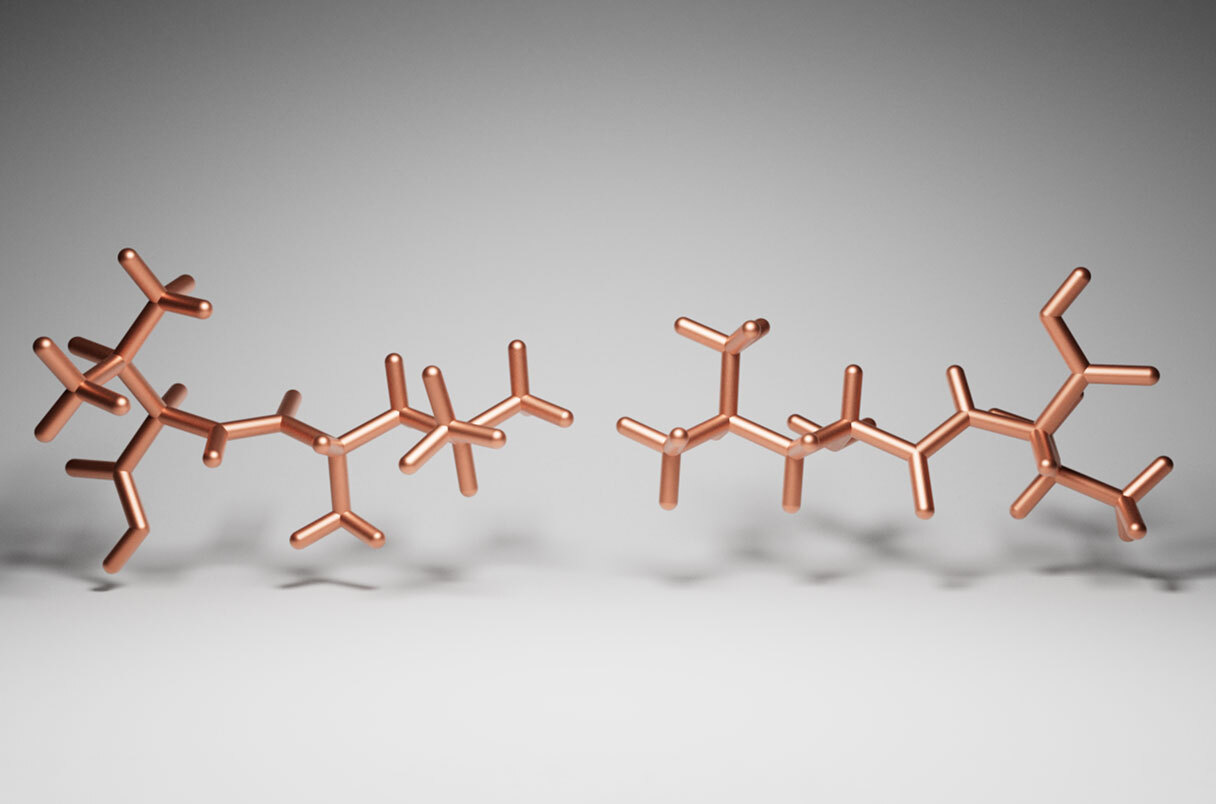
An intriguing mystery at the heart of life's origins may have found a breakthrough, as researchers propose a novel theory explaining the prevalence of left-handed proteins. Despite both left- and right-handed amino acid forms being equally abundant in the early Earth's primordial soup, life exclusively utilizes left-handed ones. Today in Nature, a team of U.S. scientists unveils their findings on the mechanisms favoring left-handed amino acids' formation, potentially unlocking the enigma that has puzzled scientists for decades.
Gerald Joyce, a renowned origin of life chemist, hails the research as "quite convincing." The study explores how various mechanisms promote the formation of dipeptides with matching handedness, shedding light on the primordial processes that may have dictated life's chirality bias.
Previous hypotheses, including the influence of meteorites and early Earth's magnetic fields, have been proposed to explain life's chirality. However, the propagation of this bias remained elusive until now.
Recent work by Matthew Powner's team at University College London revealed sulfur-based molecules that could have existed on early Earth, facilitating the formation of amino acid precursors and dipeptides. Building on this, Donna Blackmond and her colleagues at Scripps Research investigated the chiral sensitivity of these sulfur catalysts. Surprisingly, their experiments revealed a complex interplay between heterochiral and homochiral dipeptides, ultimately leading to a predominance of left-handed amino acids—a crucial step in understanding life's handedness preference.
While the study primarily focuses on dipeptides, the researchers speculate that similar processes could extend to longer peptide chains and even genetic molecules like RNA. The findings open new avenues for exploring the fundamental principles underlying the emergence of life's essential building blocks.
In essence, this groundbreaking research not only offers insights into the origins of life's chirality but also underscores the intricate interplay of chemistry and evolution in shaping the biological world as we know it.
