


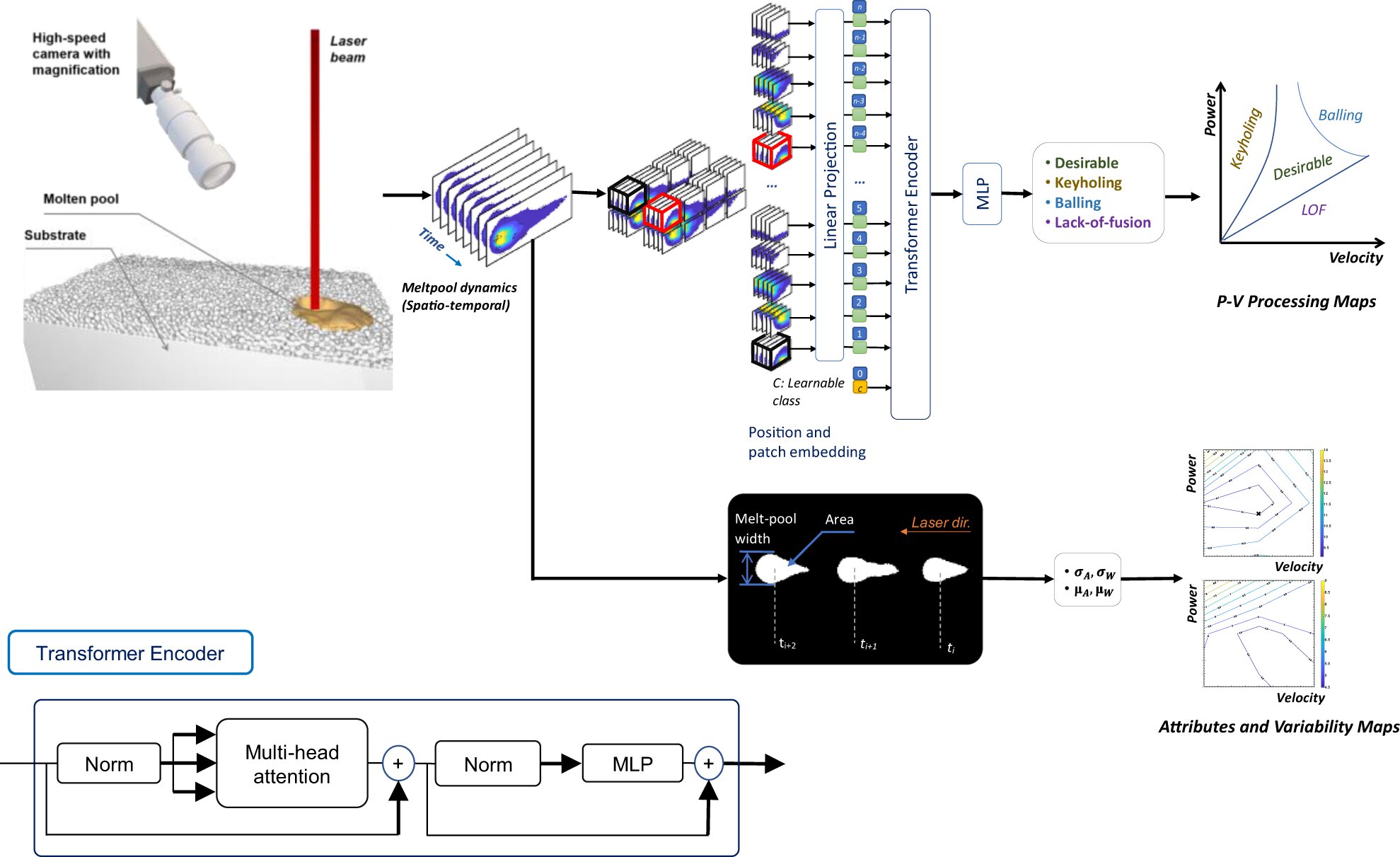
The quest for precision in 3D metal printing has reached new heights with the advent of cutting-edge AI technology. A team of researchers from Carnegie Mellon University's Mechanical Engineering department, led by David Guirguis, Jack Beuth, and Conrad Tucker, has developed a groundbreaking system that leverages ultra high-speed in-situ imaging and vision transformers to optimize crucial process parameters for metal 3D printing.
Traditionally, achieving optimal results in metal additive manufacturing has relied on labor-intensive and costly lab experiments. However, Guirguis and his team have pioneered a revolutionary approach that streamlines this process using machine learning and advanced imaging techniques. Their system not only accelerates the optimization of parameters like printing speed and laser power but is also adaptable across various metal alloys.
Central to their innovation is the integration of vision transformers, a form of machine learning originally designed for natural language processing, into the realm of computer vision. By analyzing high-speed video sequences of the printing process, the model captures both spatial and temporal relationships, enabling it to discern complex patterns and defects in real-time.
The researchers' off-axial imaging setup, coupled with high-speed video recording at over 50,000 frames per second, allows for precise observation of the molten metal's behavior during printing. Through meticulous classification of video data into distinct defect categories, such as keyholing, balling, and lack-of-fusion, the AI model achieves remarkable accuracy exceeding 90%, depending on the material.
Their study spans multiple metal alloys, including stainless steel SS316L, titanium alloy Ti-6AL-4V, and Inconel alloy IN718, showcasing the versatility and effectiveness of their approach. By generating process maps that highlight flaw detection and printability, Guirguis and his team offer a transformative solution for accelerating the qualification and development of 3D printed alloys.
In essence, their work represents a significant leap forward in the field of metal additive manufacturing, paving the way for enhanced efficiency, quality, and innovation in this rapidly evolving industry.
More: https://techxplore.com/news/2024-02-ai-3d-metal-alloys.html
