


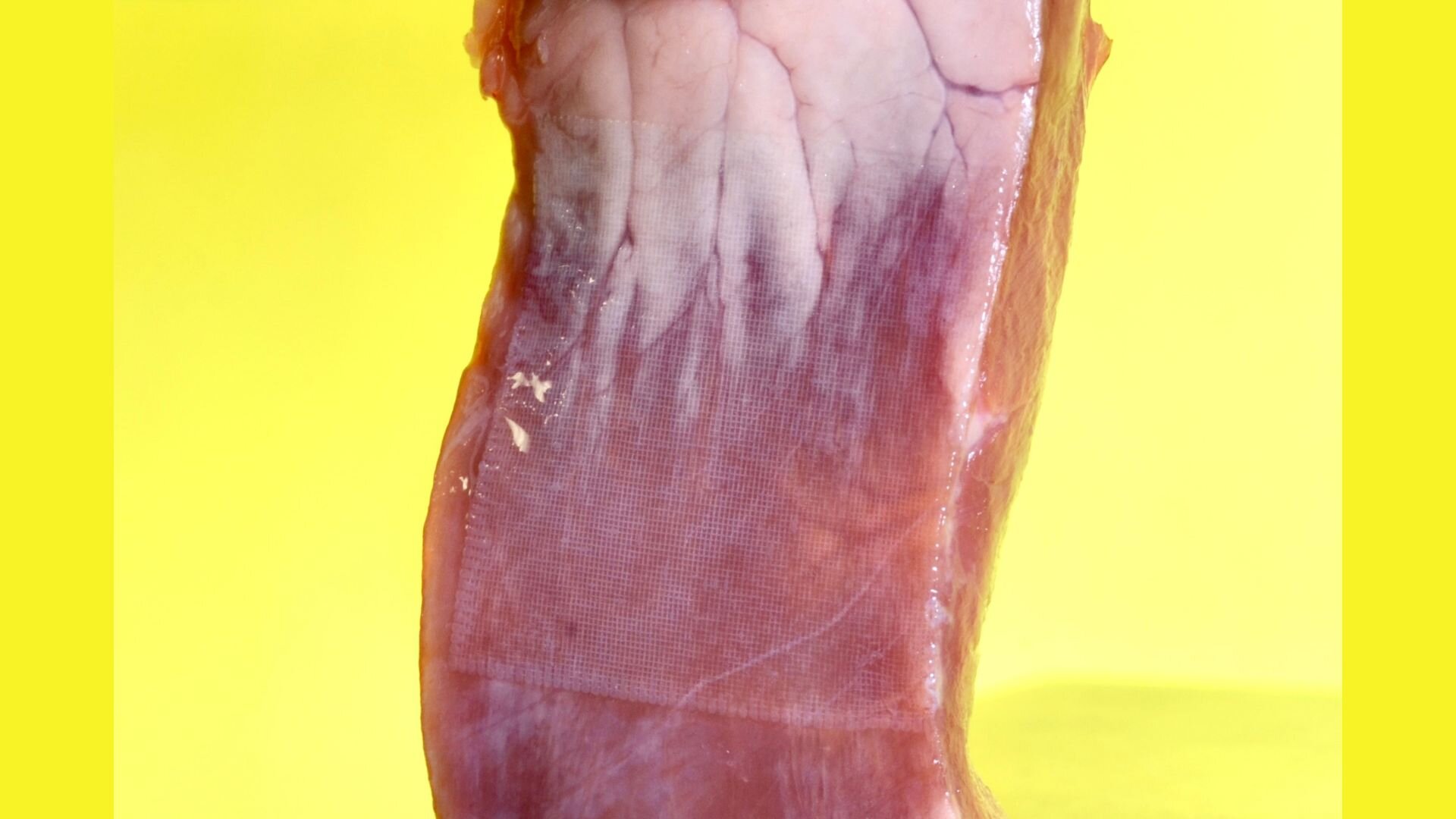
Researchers from MIT have unveiled a groundbreaking 3D-printable tissue adhesive that promises unparalleled tissue adhesion, rapid sealing abilities across diverse surgical scenarios, and a unique blood-repelling attribute. This innovative technology heralds a new era in wound care and biomedical device applications, offering transformative potential in healthcare.
Published in Nature Communications, the research marks a significant advancement in tissue adhesive technology, presenting a solution that surpasses traditional wound closure methods like sutures and staples. The adhesive's versatility, efficiency, and patient-friendly features position it as a promising alternative to existing options.
Conventional adhesives, while effective, often present limitations such as labor-intensive application, potential tissue damage, and suboptimal integration with the body. The development of 3D-printable tissue adhesives addresses these shortcomings, paving the way for enhanced wound closure and tissue repair techniques.
Sarah Wu, a Ph.D. candidate at MIT and the study's first author, highlights the motivation behind the research, citing the potential of tissue adhesives to seal and repair wounds while emphasizing the versatility of 3D printing technology. The fusion of these two domains inspired the exploration of novel material solutions with wide-ranging applications.
Central to the innovation is the formulation of a tissue adhesive ink comprising poly(acrylic acid) grafted to polyurethane, imbuing the adhesive with robust adhesion properties. Additionally, the incorporation of a blood-repelling hydrophobic matrix enhances the adhesive's resilience in challenging conditions, such as bleeding tissues, ensuring its integrity and efficacy.
The fabrication process involves precision 3D printing of the adhesive onto a hydrophobic-coated substrate, followed by the application of a polyurethane-based insulator layer and the integration of electronic components using conductive ink. This multifunctional approach enables the creation of bioelectronic patches with diverse capabilities, including tissue adhesion and electronic functionality.
The adhesive's performance was evaluated through a series of tests, demonstrating its superior tissue adhesion, mechanical strength, and biocompatibility across various tissues. Notably, the adhesive's blood-repelling feature proved instrumental in achieving hemostasis, even in heavily bleeding tissues—a significant advancement in wound closure technology.
Looking ahead, the researchers envision a wide array of applications for the 3D-printable tissue adhesive, ranging from wound closure to tissue-interfacing devices and drug delivery systems. The adhesive's versatility and customizability hold promise for personalized tissue-repair solutions tailored to individual patient needs.
In summary, MIT's pioneering research in 3D-printable tissue adhesives represents a major leap forward in biomedical technology, offering transformative solutions for wound care and tissue repair. With its innovative features and broad applicability, the adhesive stands poised to revolutionize healthcare practices and improve patient outcomes worldwide.
More: https://medicalxpress.com/news/2024-02-3d-printable-tissue-adhesive-standard.html
