


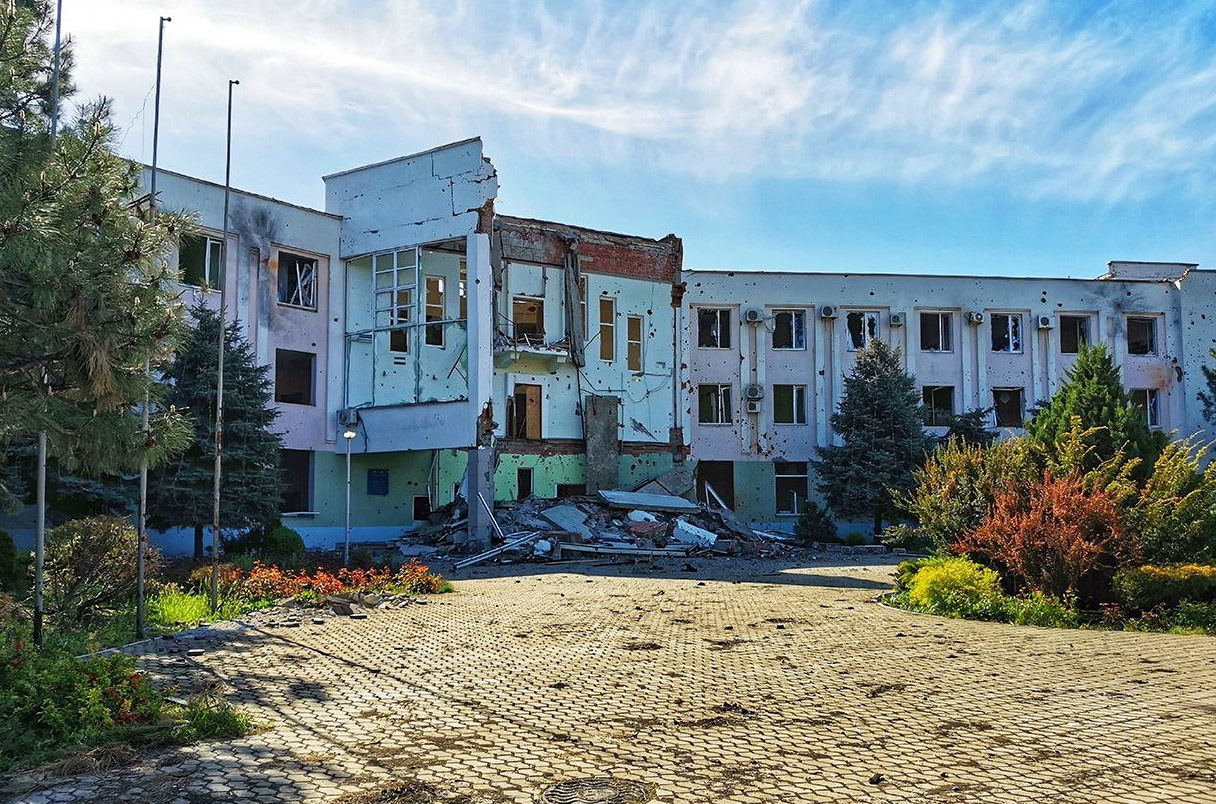
In the wake of Russia's occupation of Ukrainian territories since 2014, 31 state universities, along with numerous research institutes and scientific centers affiliated with the National Academy of Sciences of Ukraine (NAS), have been uprooted, leading to a significant displacement of students and academics. While some institutions have successfully relocated, the broader challenge lies in restoring vitality to a fractured academic landscape once the war concludes.
Mariupol State University (MSU), a testament to resilience, relocated in April 2022 and has since re-enrolled 70% of its prewar student population. However, not all relocations have been as successful, with many facing challenges in accessing key infrastructure and scholars dispersing across Ukraine and abroad.
MSU's survival journey began with a daring evacuation as Russian troops closed in on Mariupol. Rector Mykola Trofymenko, after a perilous return to the embattled city, witnessed the devastating impact of the siege, resulting in the loss of eight MSU staff and 10 students. The university's new home in Kyiv stands as a symbol of defiance, yet the scars of war remain, with scores of students still missing.
Similar tales of displacement unfold across Ukraine, such as the relocation of Dmytro Motornyi Tavria State Agrotechnological University (TSATU) to Zaporizhzhia. TSATU's courses are now entirely online, demonstrating adaptability in the face of adversity. Meanwhile, the Donetsk Institute for Physics and Engineering faced abandonment of valuable equipment following the 2014 invasion.
The Ukrainian government, contemplating the eventual reclamation of occupied territories, plans to vet academics in rogue institutions and entice them back to rebuild the academic landscape. Officials emphasize the need for incentives to attract high-tech investments, recognizing that a mere restoration of the previous academic setup will not suffice.
However, the longer the war persists, the more challenging it becomes to persuade academics who have established new lives in Ukraine and abroad to return. Some, like Ganna Boiko, vice president of the Ukrainian Botanical Society, have found new positions and built lives outside their war-torn hometowns, expressing reluctance to return.
The complex issue of rebuilding extends beyond physical infrastructure; it involves revitalizing the academic community and integrating institutions into their new environments. While some universities, like Donetsk National University (DNU), have successfully woven themselves into their new locations, others face challenges and effectively cease to exist.
MSU's commitment to returning to its hometown post-liberation underscores the resilience of Ukraine's academic spirit. President Zelenskyy emphasizes the critical role of education in shaping the country's future, declaring, "Without students, there will be no future for which our country is fighting." The narrative of Ukrainian scientists in exile reflects a poignant struggle for academic continuity amidst the ravages of war.
