


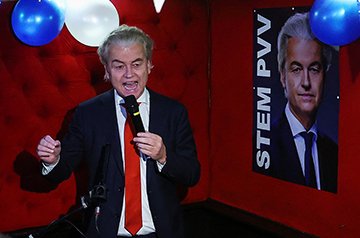
The recent unexpected triumph of the Party for Freedom (PVV), a far-right political entity led by anti-Islamist Geert Wilders, in the Netherlands has ignited apprehensions within the academic community. Following the victory, Vinod Subramaniam, President of the University of Twente, expressed concerns about the potential impact on higher education and the diverse, inclusive ethos of the university.
The PVV secured approximately 23% of the vote in the November 22 election, positioning itself as the largest party in the Dutch parliament and the first choice for forming a coalition government. The scientific community is now grappling with fears that a government led by Wilders and his right-wing allies could pose a threat to the internationalization of Dutch universities.
One major concern is the potential imposition of restrictions on international students, constituting 15% of the student body in Dutch universities. The PVV's election manifesto underscores a desire to "rigorously limit" student migration and eliminate all English-language undergraduate courses, echoing sentiments shared by some potential coalition partners.
The outgoing science minister, Robbert Dijkgraaf, had previously proposed measures to reduce international student numbers by mandating that a significant portion of bachelor's courses be taught in Dutch. However, a Wilders-led government is anticipated to intensify efforts in this direction, creating financial challenges for universities and potentially diminishing the quality of education by discouraging international collaboration.
Apart from concerns related to internationalization, the PVV's manifesto also outlines plans to exit the European Union (EU) and scrap certain climate policies. This stance could hinder Dutch scientists' access to EU funding and limit opportunities for academic exchange and collaboration across borders.
Marileen Dogterom, President of the Royal Netherlands Academy of Arts and Sciences, emphasizes the importance of international mobility for students and academics, asserting that restricting such opportunities harms the academic community. Additionally, the PVV's skepticism towards climate policies and environmental regulations raises questions about the party's stance on science-related issues.
As the political landscape unfolds, uncertainties loom over the future direction of Dutch science policy. The appointment of Ronald Plasterk, a former molecular biologist, to explore coalition options adds complexity to the situation. While the PVV's potential coalition partners express positive sentiments about research, Wilders' reputation for challenging established facts and framing experts as elites poses a unique challenge for the scientific community.
In the face of these uncertainties, Subramaniam strives to convey a message of reassurance to the international members of the academic community, emphasizing their belonging and welcome within the university. The outcome of ongoing political negotiations will undoubtedly shape the trajectory of Dutch science and academia in the coming years.
More: https://www.science.org/content/article/shock-election-win-far-right-worries-academics-netherlands
