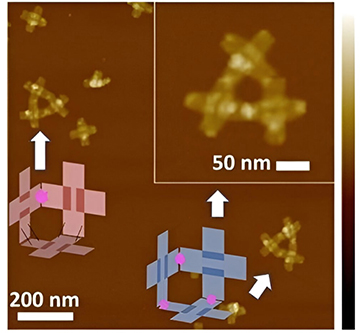
Scientists from New York and Ningbo, China, have achieved a significant breakthrough in nanotechnology by creating miniature robots constructed from DNA that exhibit the ability to self-replicate. These nanorobots, at a scale so minute that 1,000 of them could fit within the width of a sheet of paper, hold the potential for revolutionary applications, such as targeted missions against cancer cells in the bloodstream and the collection of toxic waste from the ocean without surgical intervention.
Lead researcher Feng Zhou, affiliated with New York University's Department of Physics and the Chinese Academy of Sciences, emphasized the nanorobots' potential as manufacturing platforms capable of autonomously executing repetitive tasks with precise accuracy. The 100-nanometer-wide mechanisms employ innovative three-dimensional folding of DNA strands, allowing for limitless self-replication—a departure from previous 2D construction in DNA robotics.
Zhou highlighted the team's introduction of multiple-axis precise folding and positioning as a breakthrough technology for nanomanufacturing, paving the way for the creation of more intricate and functional nano- and microdevices. The nanorobots manipulate DNA strands, aligning and welding them together before proceeding to subsequent steps in the replication process.
Andrew Surman, a nanomaterials specialist and chemistry professor, acknowledged the challenges of assembling such nanoscale structures, emphasizing the significance of precise folding for optimal functionality. The researchers' work builds upon four decades of progress in DNA nanotechnology, offering potential applications in nanomedicine, diagnostic sensing, and nanorobotics.
Zhou envisions programmable and light- or heat-controlled nanomachines and robots capable of producing biocompatible structures and devices on a nanoscale. The implications extend to potential therapeutic applications, such as constructing enzymes or proteins in tissues for individuals with genetic deficiencies.
While the study represents a monumental stride in nanotechnology, concerns reminiscent of science fiction scenarios have been raised. Pioneering nanotechnologist E. Eric Drexler, known for coining the term "gray goo," warned of a catastrophic replication scenario where nanobots consume all biomass. However, researchers remain focused on the positive potential for groundbreaking advancements in medicine and environmental solutions through the development of these self-replicating 3D DNA nanorobots.